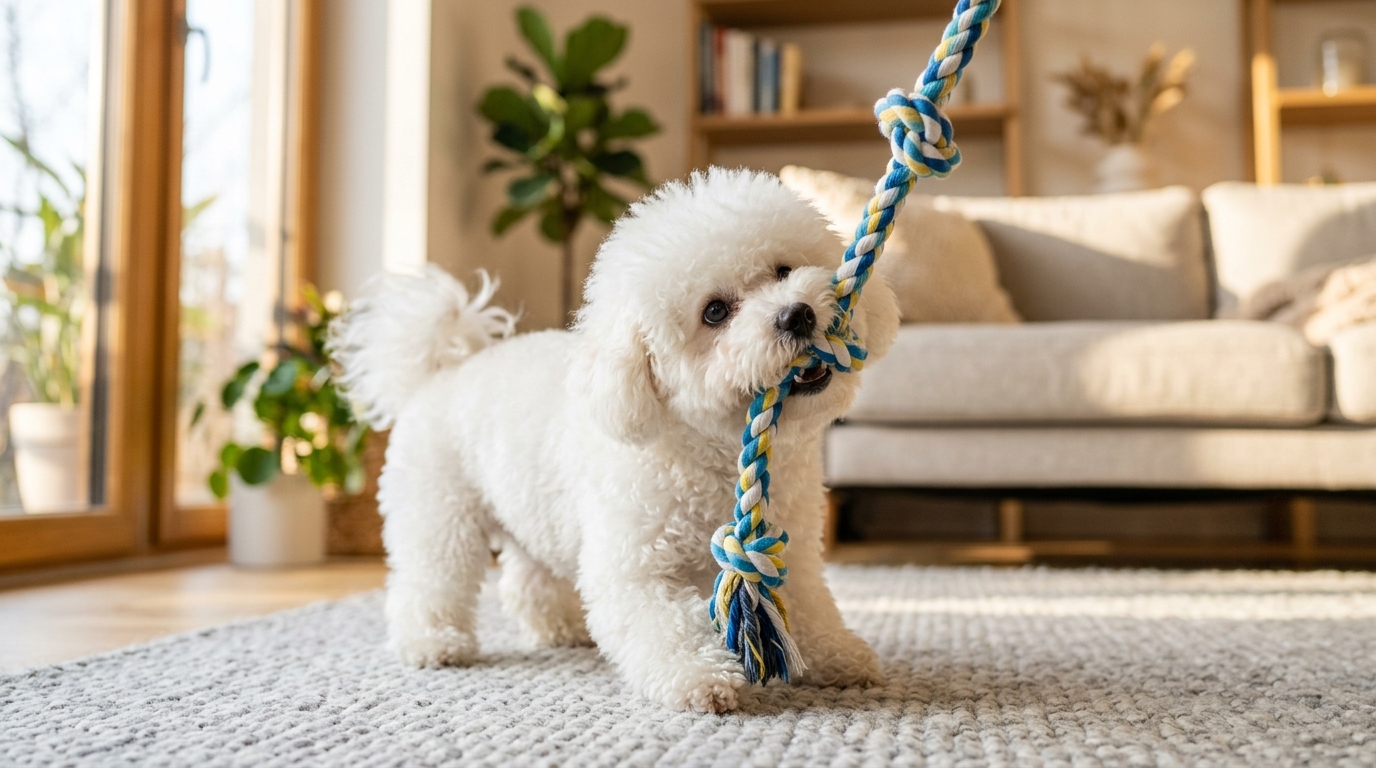
The best small dog breeds for apartments are usually calm indoors, trainable, not extreme barkers, and able to meet their exercise needs with walks, play, and mental work. Bichon Frise, Havanese, Cavalier King Charles Spaniel, Shih Tzu, Maltese, French Bulldog, Pug, Boston Terrier, Yorkshire Terrier, and Toy or Miniature Poodle can all fit apartment life for the right owner.
Apartment success is not only about size. A small, loud, under-exercised dog can be harder in an apartment than a larger calm dog.
Quick Apartment Fit Table
| Breed | Apartment strengths | Tradeoffs |
|---|---|---|
| Bichon Frise | Social, compact, low shedding | Grooming and potty routine |
| Havanese | Friendly, adaptable, sturdy | Coat care and separation stress |
| Cavalier King Charles Spaniel | Gentle, companion-focused | Health screening and weight |
| Shih Tzu | Lower exercise needs, small size | Face, eye, and coat care |
| Maltese | Tiny, low shedding | Grooming and barking control |
| French Bulldog | Compact, often lower exercise | Heat and breathing safety |
| Pug | Social, sturdy, playful | Heat, breathing, weight |
| Boston Terrier | Small, lively, trainable | Excitement and heat |
| Yorkshire Terrier | Small, portable, low shedding | Barking and coat care |
| Toy or Miniature Poodle | Smart, low shedding | Grooming and mental work |
AKC's apartment guidance notes that living space is only one factor. Energy, noise, exercise, and training matter.
What Makes a Small Dog Apartment-Friendly
Look for:
- moderate exercise needs
- low to moderate barking with training
- comfort with elevators, hallways, and neighbors
- easy potty schedule
- manageable grooming
- ability to settle indoors
- no severe separation distress
The research signals around this keyword show that people often ask for "small space" dogs and "low-shedding apartment dogs." That is useful, but low shedding should not outrank noise, routine, or daily care.
Barking Matters More Than Size
In apartments, barking is often the real problem. A tiny dog that alert-barks at every hallway sound can create more trouble than a quiet larger dog.
Before choosing a breed, ask:
- is this breed known for alert barking?
- can I train quiet cues consistently?
- will the dog be alone during busy hallway hours?
- can I use white noise, curtains, and enrichment?
- does the building have strict noise rules?
Do not wait until complaints arrive. Start sound exposure and calm-settle training early.
Potty Logistics
Apartment potty training needs planning.
| Situation | Better plan |
|---|---|
| High-rise building | Carry young puppies at first if needed |
| No quick grass access | Use a consistent outdoor route or approved potty station |
| Bad weather | Keep the routine the same anyway |
| Tiny puppy | More frequent breaks than an adult |
| Senior dog | Plan for shorter holding times |
Pads can help in some apartments, but they may slow outdoor training if the rules are unclear. Decide where you want the dog to go long term.
Exercise in a Small Space
Most small apartment dogs still need daily activity.
Use:
- two or three short walks
- food puzzles
- scent games
- short training sessions
- hallway-free indoor fetch only if safe
- calm chew time
A bored small dog may bark, chew, pace, or have accidents. The apartment is not the issue by itself. Under-stimulation is usually the issue.
Good Choices for Full-Time Workers
If you work away from home, avoid choosing only by breed lists. Ask how long the dog will be alone, whether a walker can come, and whether the dog has separation stress.
Often better:
- an adult dog with known alone-time tolerance
- a lower-energy companion breed
- a consistent midday walk
- safe enrichment before leaving
- gradual alone-time training
Young puppies are usually a poor fit for long workdays without help.
Mistakes to Avoid
- choosing a breed only because it is small
- ignoring bark tendency
- skipping exercise because the dog is tiny
- expecting a puppy to handle a full workday alone
- picking a high-maintenance coat without grooming budget
- assuming low shedding means allergy-safe
- failing to check lease breed and weight rules
FAQ
What small dog breeds are good for apartments?
Bichon Frise, Havanese, Maltese, Shih Tzu, Cavalier King Charles Spaniel, French Bulldog, Pug, Boston Terrier, Yorkie, and Toy Poodle can all work for some apartment homes.
What is the calmest tiny dog?
Adult temperament matters more than a breed label. Cavaliers, Shih Tzus, and some Maltese or Bichons can be calm, but puppies of any breed need training.
What is the least barky small dog?
There is no guaranteed quiet breed. Look for an individual dog with a calm history and start noise training early.
Can apartment dogs be left alone?
Some adult dogs can handle reasonable alone time. Puppies and separation-sensitive dogs need a slower plan and often midday help.