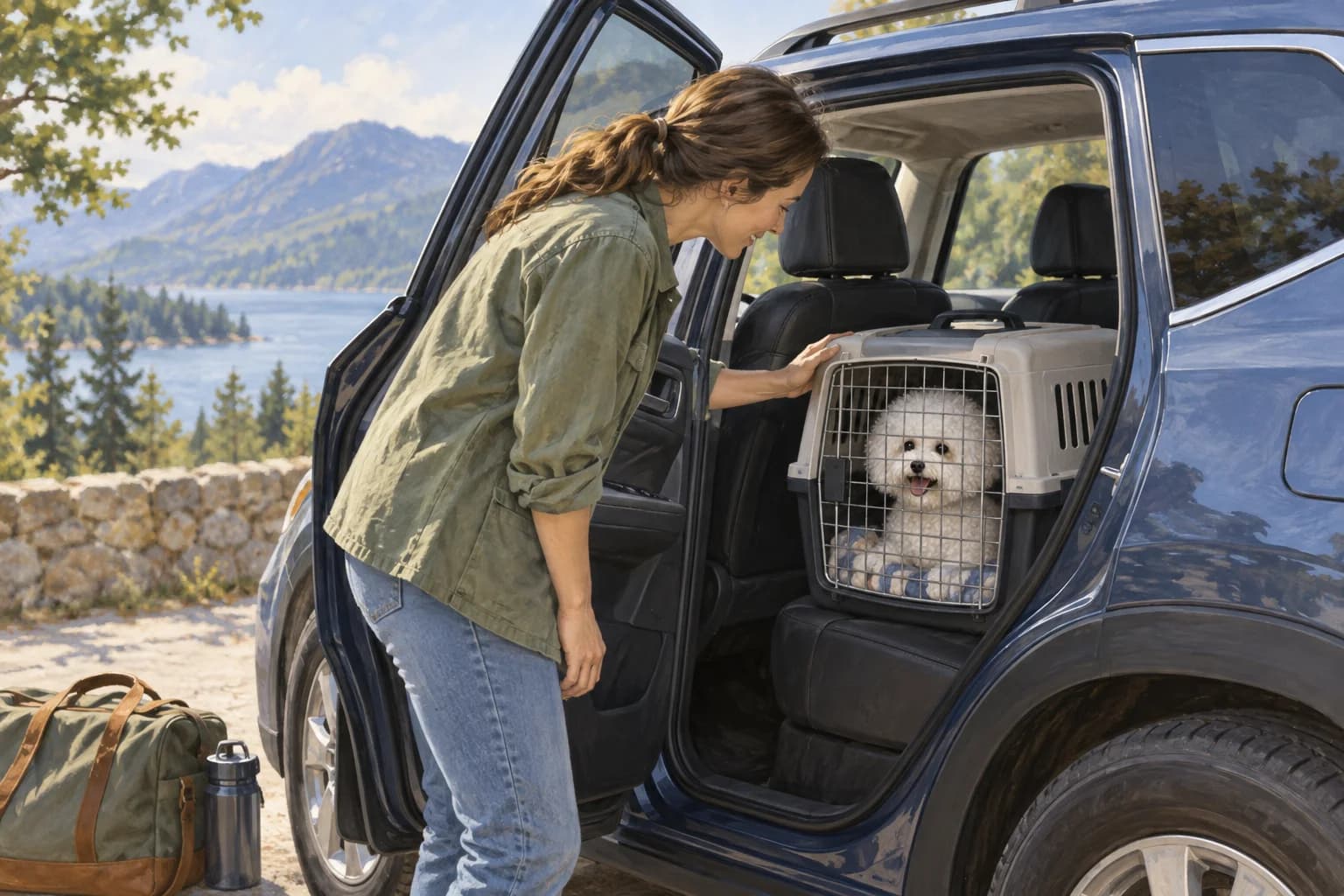
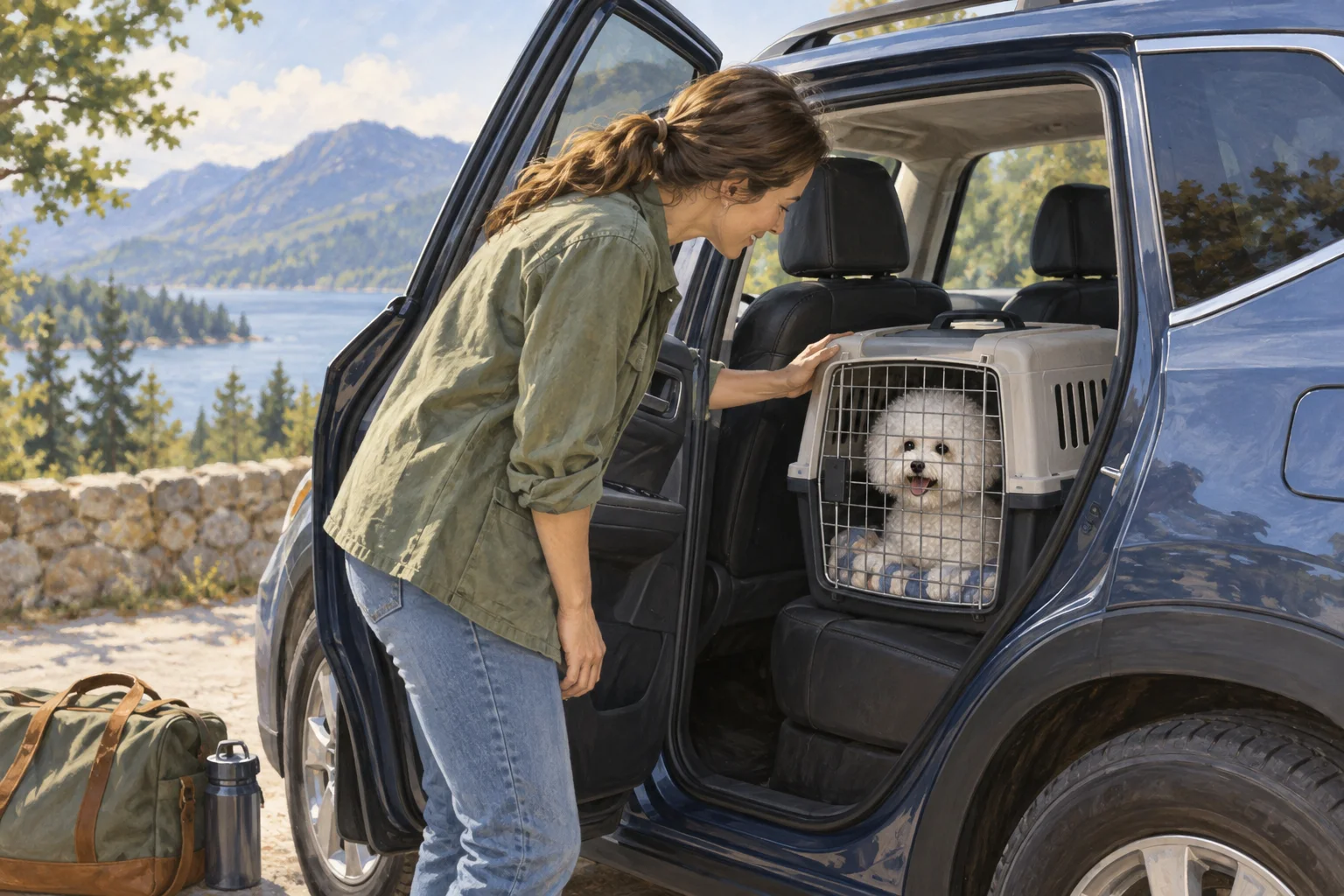
A Bichon Frise's small size can simplify travel, but a safe trip still requires restraint, identification, current records, and advance practice. Start with short local outings before committing to a long drive or flight.
Decide whether this trip suits your dog
Consider age, breathing, heart and joint health, motion sickness, anxiety, temperature, trip length, and the care available at the destination. Ask your veterinarian about international or interstate documentation and any condition that could make travel unsafe.
Two weeks before departure
- Confirm the microchip registration and add a current ID tag.
- Practice relaxed time in the exact carrier or vehicle restraint you will use.
- Check destination vaccination, parasite, and health-certificate rules.
- Verify the lodging policy directly, including fees, unattended-pet rules, and relief areas.
- Locate a veterinary clinic and emergency hospital near the destination.
What to pack
- Usual food, treats, water, bowls, and any prescribed medicine
- Leash, harness, secure carrier or crash-tested restraint, and waste bags
- Vaccination and health records plus veterinarian contact information
- Recent photo, microchip number, and emergency contact
- Brush, comb, towel, bedding, and a familiar quiet toy
Car travel
Keep the dog in a secured carrier or appropriate vehicle restraint, never loose in the front seat or on a lap. Build tolerance with short trips and stop often enough for water and leashed relief. Never leave a dog in a parked car; dangerous temperatures can develop quickly even on a mild day.
Air travel
Airline rules, carrier dimensions, fees, routes, weather restrictions, and document requirements change. Verify the current policy with the operating airline for every flight segment before buying a nonrefundable ticket. The AVMA advises discussing the dog's health and airline rules with a veterinarian and cautions against tranquilizers for air travel unless specifically directed by a veterinarian.
Hotel and rental routine
Inspect the room before releasing the dog. Cover unfamiliar gaps, remove food and cleaning products, and identify the nearest exit. Keep meals, walks, and bedtime close to the home routine. Do not leave the dog alone unless the property permits it and your dog is already comfortable settling in that environment.
Coat care on the road
A Bichon's curly coat tangles where a harness and carrier rub. Comb the armpits, chest, ears, and legs daily on active trips. Rinse and dry after salt water, pool water, mud, or sand. For water activities, use the Bichon swimming-safety guide.
Signs the plan needs to change
Stop and reassess for repeated vomiting, diarrhea, refusal to drink, labored breathing, collapse, unusual weakness, persistent panic, or heat-stress signs. Contact a veterinarian when symptoms are more than brief mild stress.