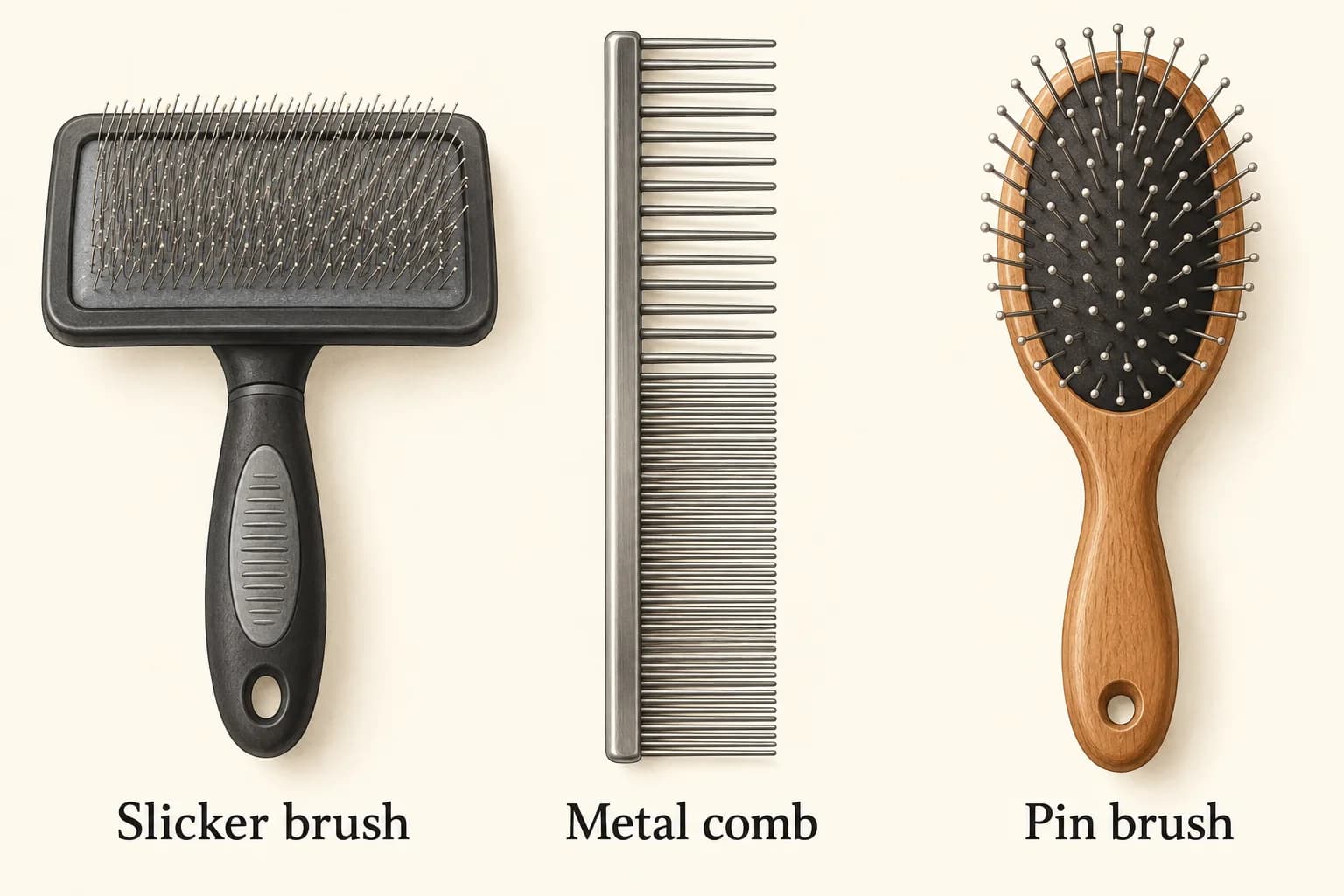
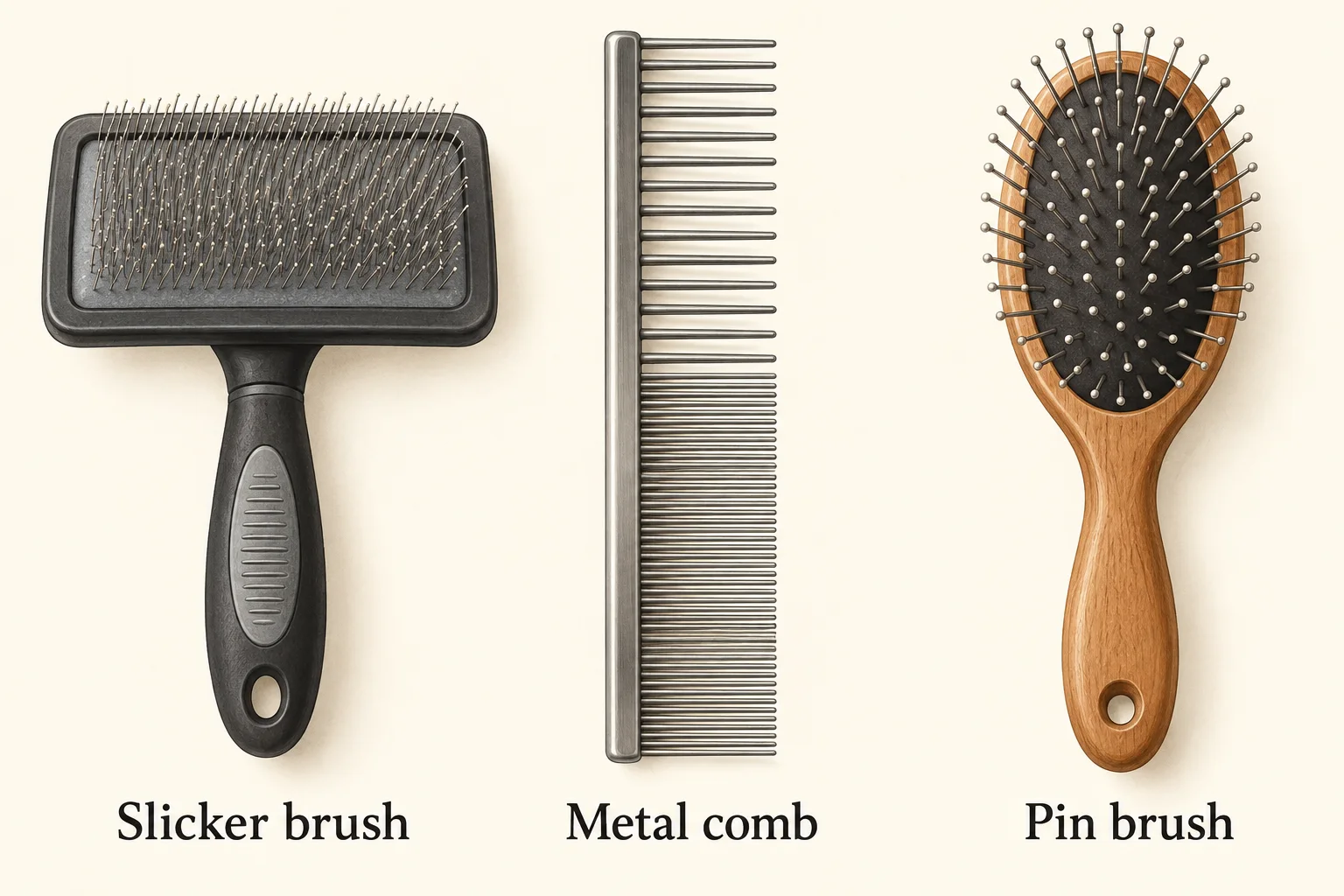
Build your kit around the coat length your Bichon actually wears. Ask your groomer to demonstrate the brush and comb on your dog before buying specialist equipment. This guide explains selection criteria; we have not tested or ranked individual products.
The brush and comb work together
Choose a brush that is comfortable in your hand and suitable for the coat, followed by a metal comb to check for remaining tangles. Ask how much pressure to use and how to reach the coat underneath without scraping skin. A smooth surface can conceal a tangle near the roots.
Buy for the jobs you can do safely
| Item | Purpose | Before buying |
|---|---|---|
| Brush and metal comb | Routine coat maintenance | Have a groomer demonstrate technique and tooth spacing. |
| Dog shampoo and towels | Bathing and drying | Follow the product label; ask your vet about irritated skin. |
| Nail clipper or grinder | Nail maintenance | Learn to avoid the quick and introduce the tool gradually. |
| Washable mat | A stable grooming surface | Check that the dog can stand comfortably without slipping. |
Know when to stop
Do not cut underneath a tight mat or try unfamiliar scissors close to the eyes. If handling causes pain, marked fear or struggling, stop and ask a groomer or veterinarian for help. AKC nail-care guidance explains gradual handling practice and how to avoid cutting into the quick.
Keep the routine realistic
The AKC Bichon profile recommends frequent brushing and regular bathing and clipping. Use the grooming schedule to plan between appointments. The home versus professional grooming guide helps divide jobs.
Clean tools according to their instructions and replace bent or damaged parts. For wet-weather maintenance, read the coat-care routine. Redness, odor or painful skin needs attention beyond a change of brush; see skin warning signs.