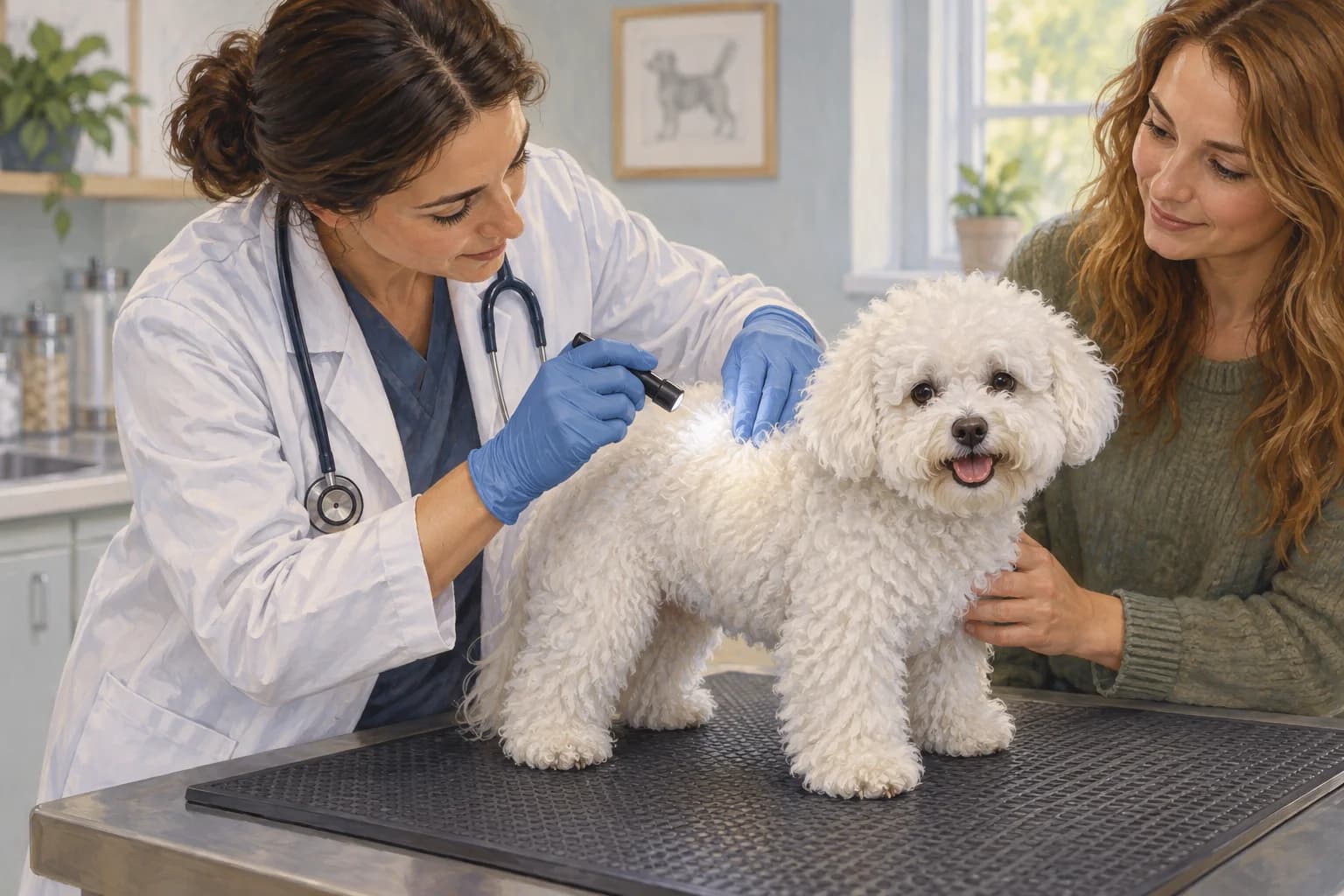
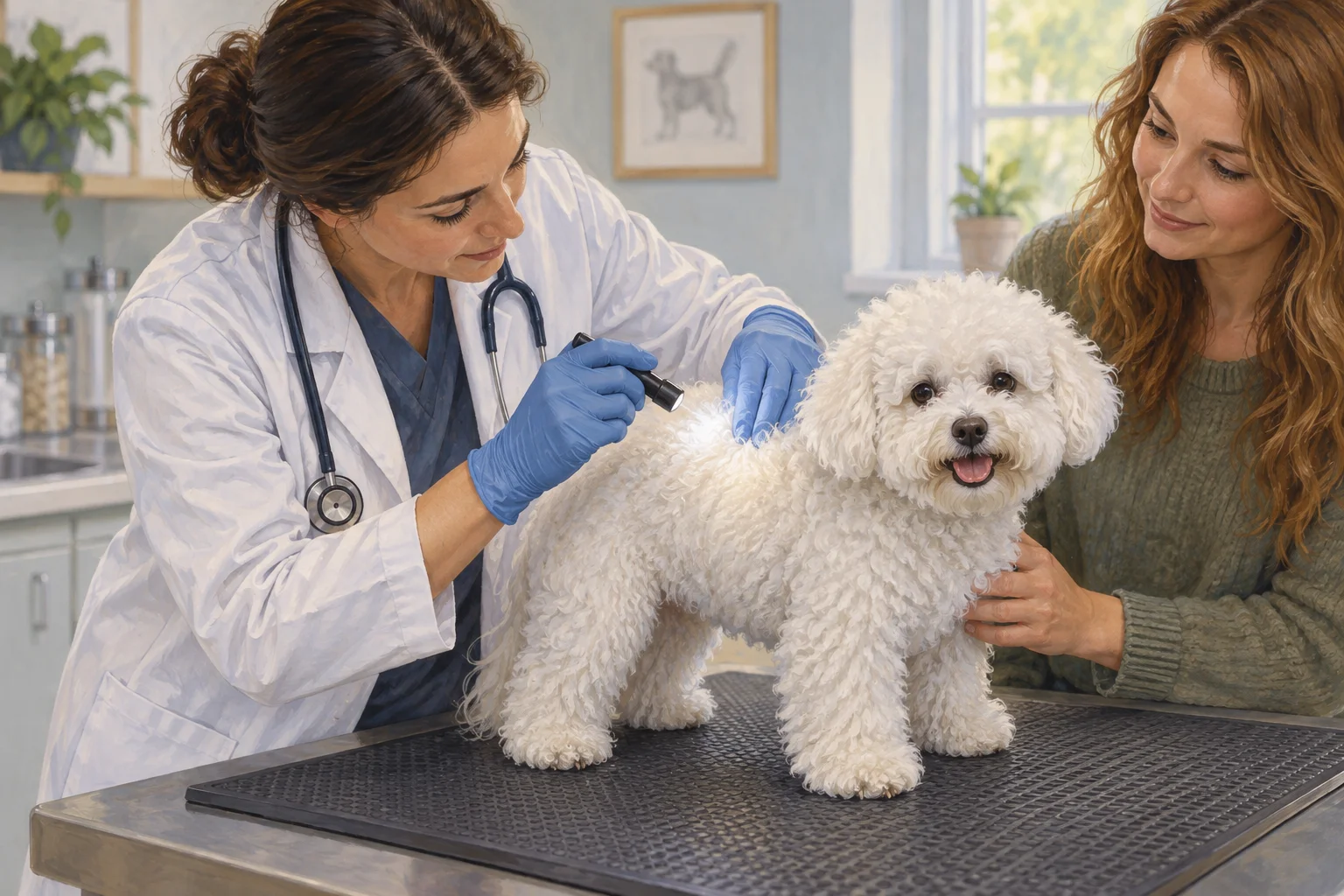
A red or itchy patch is not enough to diagnose a skin infection at home. Allergies, fleas, mites, yeast, ringworm, irritation, and bacterial pyoderma can overlap. Because the dense Bichon coat can hide lesions, part the hair and check the skin whenever scratching, licking, odor, or coat texture changes.
Signs that justify a veterinary appointment
- Scaling, crusts, pustules, circular hair loss, redness, or moist skin
- Musty or foul odor, pus, blood, pain, swelling, or draining areas
- Repeated ear or paw problems, intense itching, or a problem that returns after treatment
Seek urgent care for rapidly spreading swelling, severe pain, collapse, breathing difficulty, fever with marked illness, or extensive bleeding or discharge.
Why infections recur
Merck notes that bacterial pyoderma is often secondary to another problem, including allergies, parasites, endocrine disease, moisture, or grooming-related conditions. Treating only the visible infection may not prevent recurrence.
How a veterinarian diagnoses it
The examination may include skin cytology, scrapings, fungal testing, or bacterial culture, depending on the lesion and treatment history. Those tests distinguish bacteria from yeast or parasites and help avoid unnecessary or ineffective antimicrobial treatment.
Safe care while waiting
- Prevent licking and scratching with the method your clinic recommends.
- Keep the area clean and dry without peroxide, alcohol, essential oils, or human antibiotic creams.
- Do not use leftover antibiotics or medicated shampoo from another pet.
- Photograph the area and note diet, grooming, parasite prevention, and symptom timing.
Coat and moisture prevention
Dry the coat to the skin after bathing or swimming, maintain a mat-free coat, and wash bedding regularly. Recurring disease still needs a cause-focused veterinary plan; grooming alone cannot cure allergies, parasites, or endocrine disease.