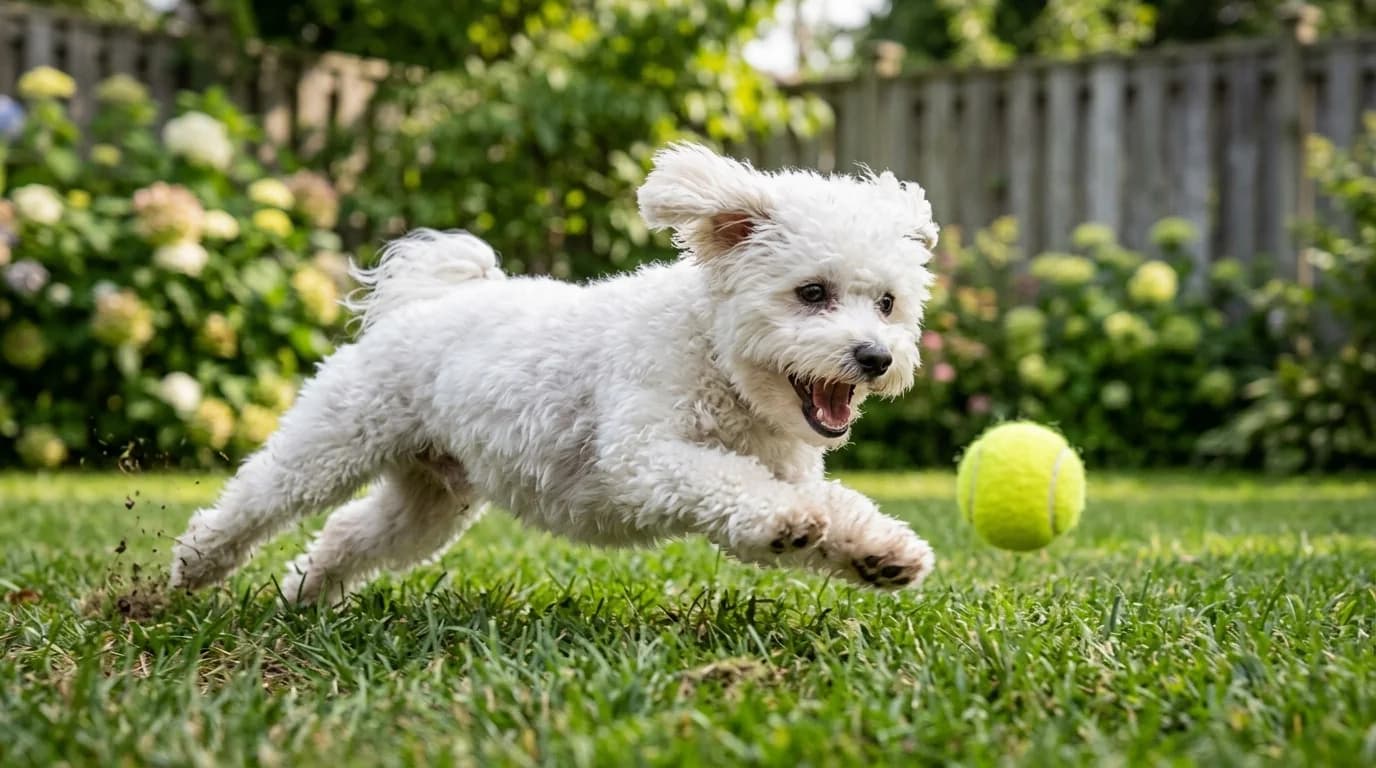
The best toy for your Bichon depends on how they play. A dog that carries a soft toy needs a different choice from one that pulls seams apart. This is a selection guide, not a hands-on product ranking or a claim that any toy is indestructible.
Match the toy to the activity
| Play style | What to look for | What to check |
|---|---|---|
| Carrying and cuddling | A washable soft toy that is easy to pick up | Loose eyes, open seams and accessible stuffing |
| Food puzzles | A beginner puzzle with openings suited to the dog’s food | Removable parts, frustration and whether the dog chews the casing |
| Fetching | A toy sized so it cannot be swallowed | Cracks and a surface that remains easy to grip |
| Gentle tug | A toy you can both hold comfortably | Fraying and pieces the dog could pull off |
Inspect before and after play
Humane World for Animals recommends choosing toys for the dog’s size and behavior, supervising play, and removing items that break. Remove ribbons or other detachable parts and replace damaged toys. A small-dog label alone does not tell you whether an item suits your Bichon.
Try the toy while you are home
Watch whether your dog carries, licks, chews or dismantles it. Put unfamiliar toys away when you cannot supervise. For a food puzzle, use part of the dog’s normal meal and account for extra treats in the day’s food allowance. See the feeding schedule guide.
Build a small rotation
Start with one toy for shared play and one for an activity your dog already enjoys. Rotate them when interest fades instead of buying a large collection at once. Record which materials survive normal use and which your dog damages.
If you are choosing toys for absences, first read how to plan alone time. Enrichment does not make a distressed dog comfortable alone. For outings, see travel planning with a Bichon.