Some Bichon Frises settle comfortably during short absences. Others become distressed as soon as their owner leaves. Decide how long to leave your dog by observing what happens at home, accounting for toilet needs, and arranging help when your workday exceeds what your dog can manage.
Start with the workday you actually have
Write down when you leave, when you return, and who can visit in between. Include commuting time. A lunchtime visit is useful only if it arrives before your dog needs a toilet break or becomes distressed. Ask a walker or sitter about availability before relying on them for a regular shift.
| Your situation | What to arrange |
|---|---|
| A new puppy | Frequent toilet trips, supervision and short practice absences. Do not plan a full workday in a crate. |
| An adult already comfortable alone | A familiar resting area, water, a toilet opportunity before leaving and a visit matched to the dog’s needs. |
| A newly adopted dog | Learn the dog’s routine before assuming it can manage your usual absence. |
| A senior or dog with health needs | Adjust the schedule with your veterinarian if pain, medication or accidents change the dog’s needs. |
How long is too long?
There is no breed-wide number that makes an absence safe. Bladder control and emotional comfort are separate limits. Humane World for Animals advises against crating puppies under six months for more than three or four hours; younger puppies may need breaks sooner. That is a maximum crate guideline, not a target for training. See the puppy crate-training schedule for planning examples.
Watch what happens after you leave
A recording can help you describe behavior to a professional. Note when the dog starts pacing, vocalizing or approaching the door, whether it settles, and whether it eats. ASPCA guidance identifies persistent howling, drooling, escape attempts and distress around departures as possible separation-anxiety signs. New accidents also warrant a veterinary check. A recording is evidence to discuss, not a diagnosis.
Practice below the point of distress
Begin with an absence your dog can tolerate calmly, even if it is brief. Return before distress develops and increase duration according to the dog’s response. If you see panic, shorten the exercise and seek qualified help. Avoid punishment when you return. ASPCA guidance recommends professional support for moderate or severe cases.
A crate is suitable only when the dog is comfortable in it. A dog trying to escape confinement can injure itself. Arrange company while working on a treatment plan instead of repeatedly testing a long absence.
Prepare a comfortable space
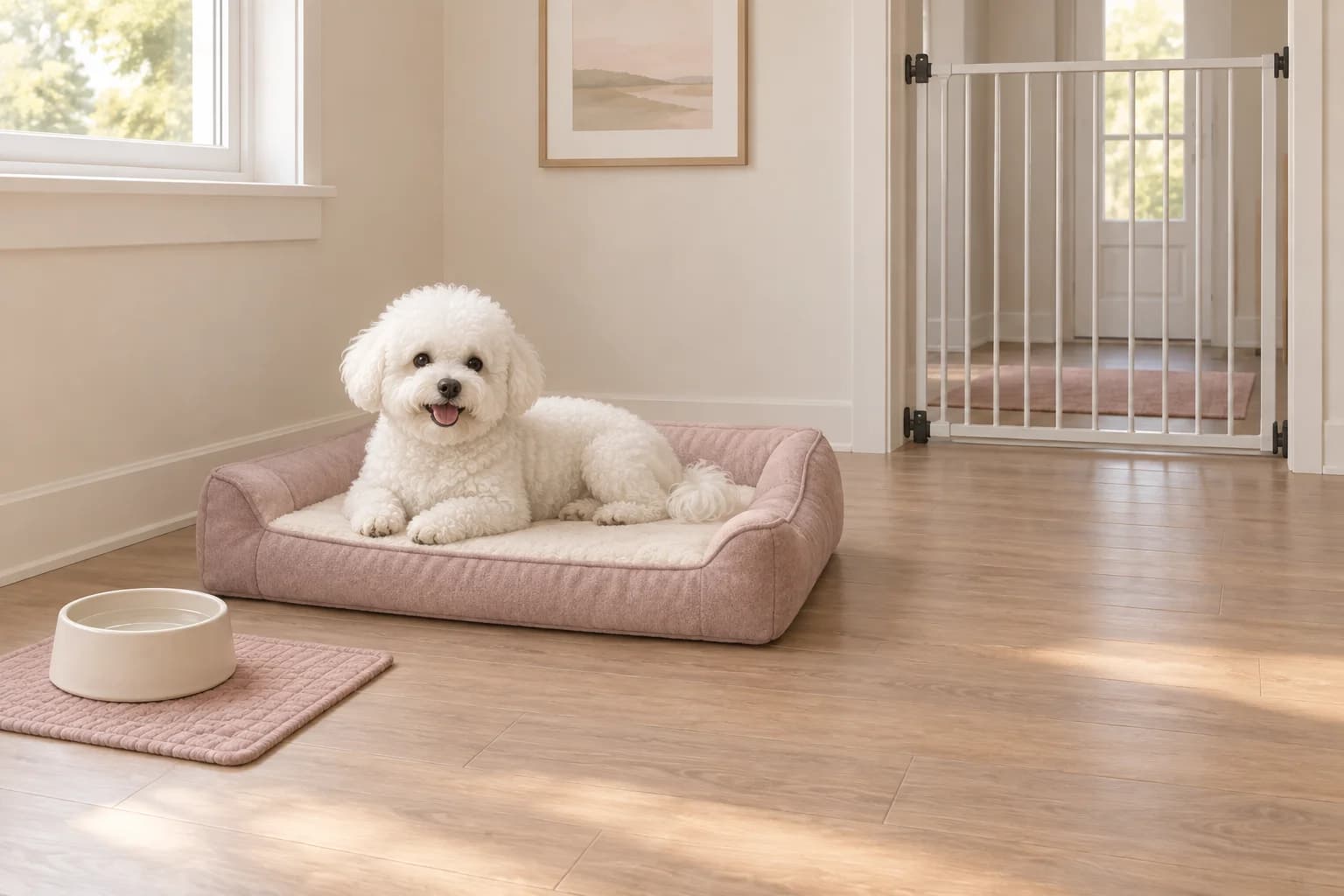
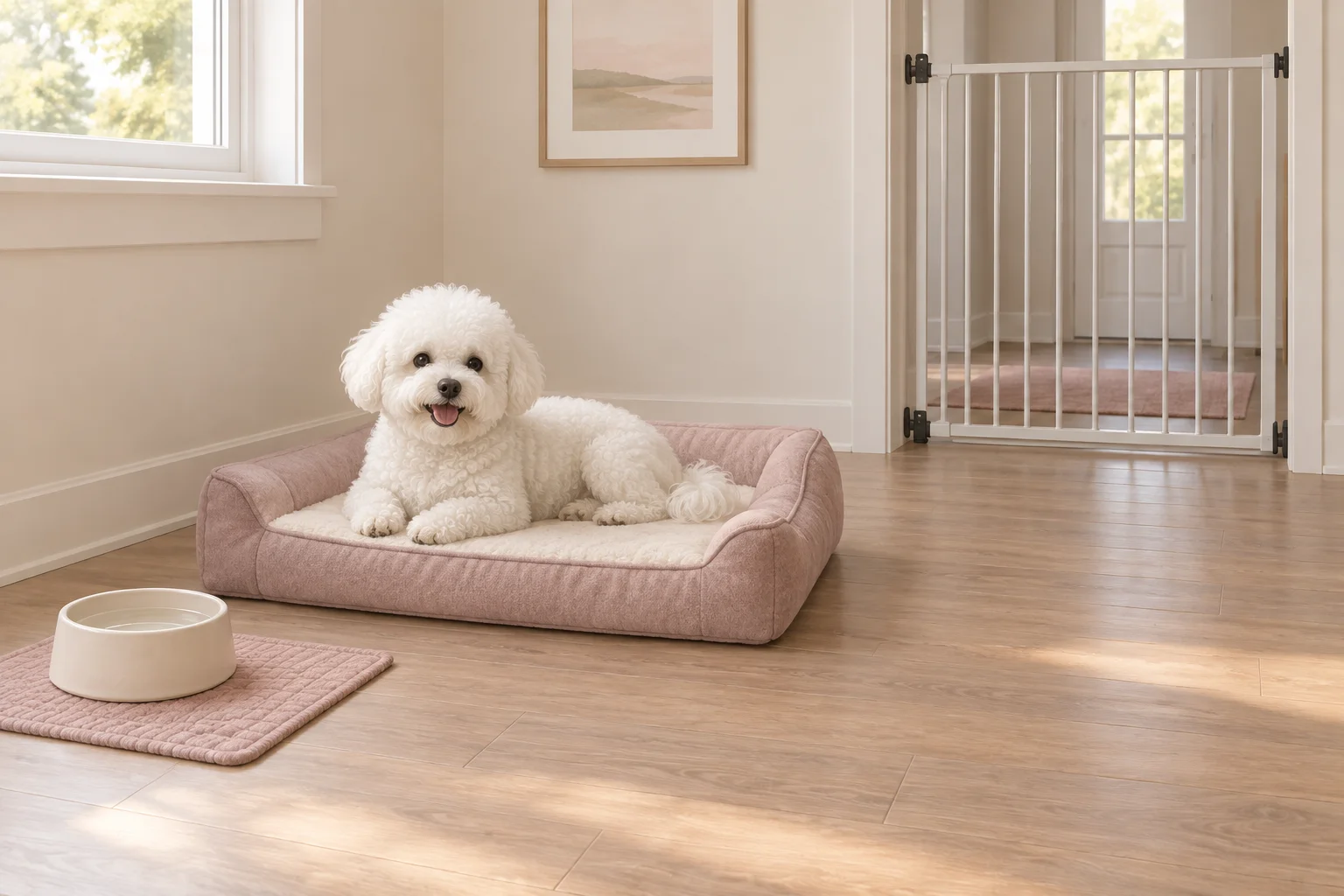
Use a familiar, dog-safe area with water and a resting place. Test any enrichment item while you are home before leaving it with your dog. Our toy selection guide helps you match materials and size to play behavior. Toys cannot replace treatment for panic.
If you work a full shift
Compare a sitter, help from someone your dog knows, a suitable daycare, or a change in your own schedule. Ask who handles an unexpected delay and keep a backup contact. For prospective owners, the small-breed comparison covers everyday care commitments.