Practical Bichon Frise care guides — grooming, health, nutrition & daily routines
BichonFrise.com
Luxury Care & Health Hub
Presentation
Updated August 21, 2026
3 min read

Bichon Frise vs. Maltese, Toy Poodle & Havanese: Complete Breed Comparison Guide

Editorially reviewedSources checked and medical claims linked for reader verification
Updated: August 21, 2026
Editorial policy
Bichon Frise vs Maltese vs Poodle comparison

Key Takeaways

  • Short, positive care routines work best for Bichon Frises.
  • Daily coat maintenance prevents matting and protects sensitive skin.
  • Always seek prompt guidance from a licensed veterinarian for health concerns.
Free Live Feature • Instant AI Visual Triage
100% Free & Non-Clinical

Got a Photo of Your Dog? Run Free Instant AI Visual Analysis

Upload a photo of your Bichon for instant coat matting, facial tear-stain severity grading, and non-clinical care protocol guidance.

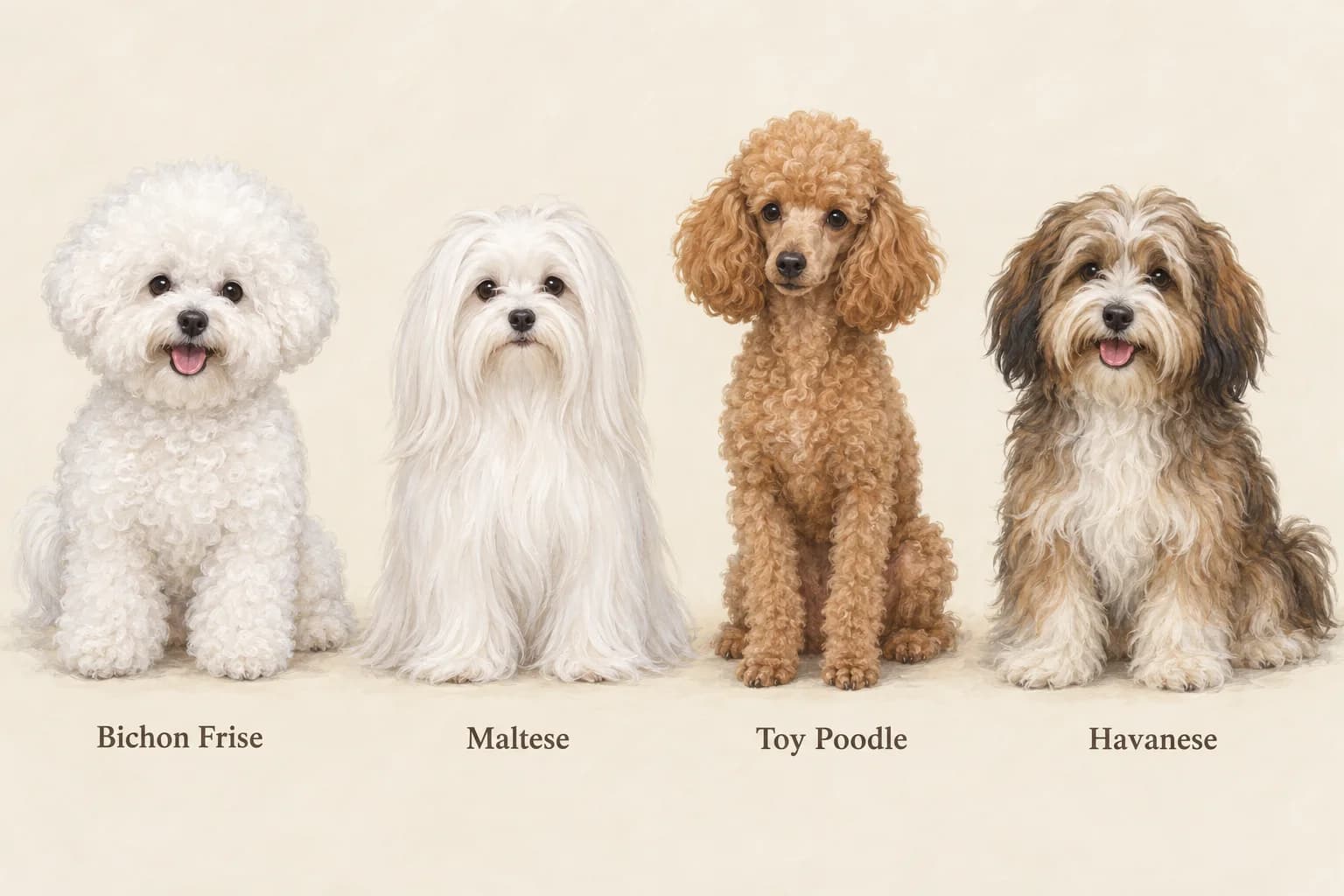
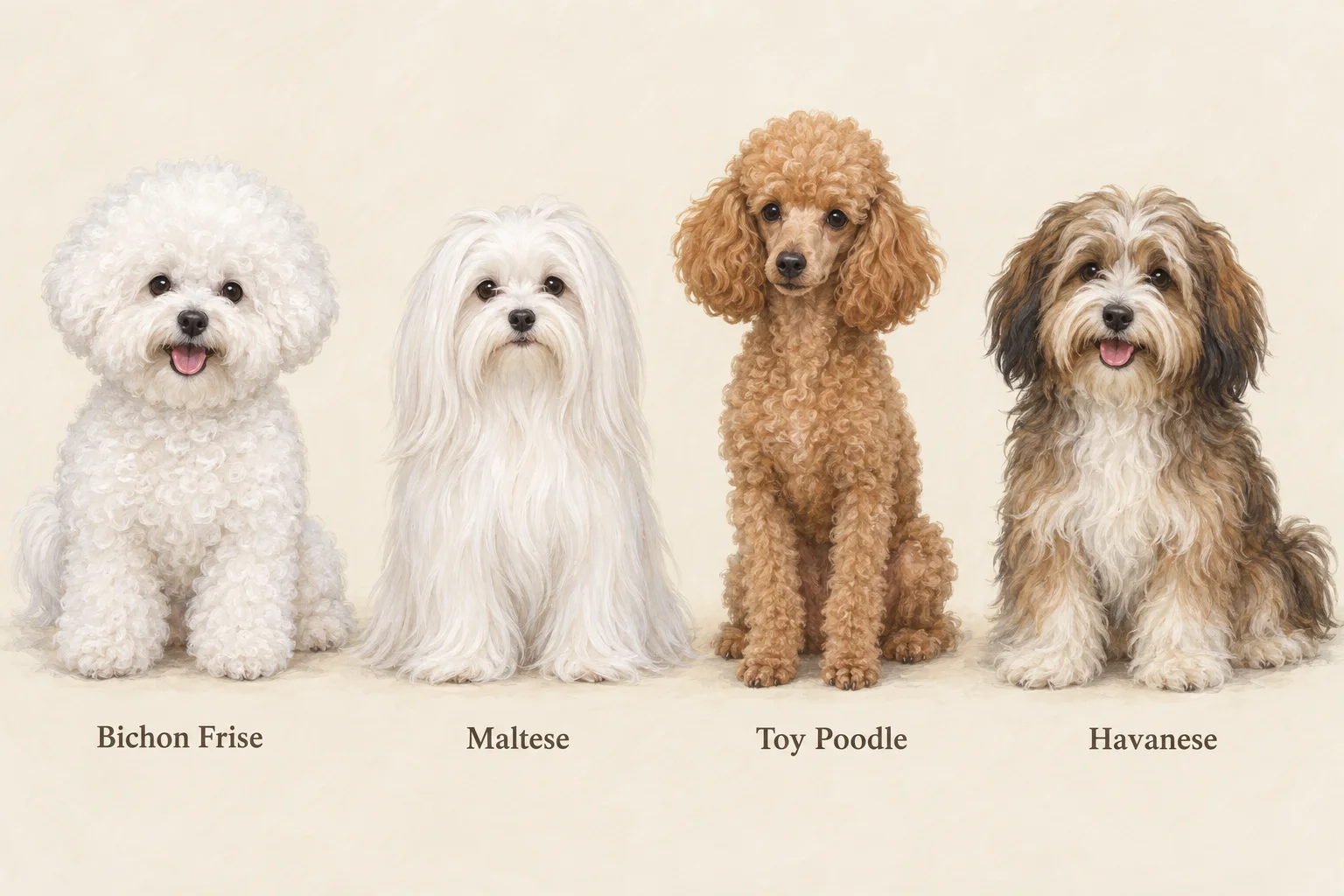
Choosing between small white and hypoallergenic companion breeds often comes down to four top contenders: the Bichon Frise, the Maltese, the Toy Poodle, and the Havanese. While all four are affectionate, low-shedding, and well-suited for apartment living, their coat textures, energy levels, barking tendencies, and grooming maintenance differ significantly.

Head-to-Head Specification Comparison

BreedAdult WeightCoat TypeHypoallergenic RatingShedding LevelBarking TendencyAverage Lifespan
Bichon Frise12 - 18 lbsDense Double Coat (Curly)5 / 5 (Near-Zero Dander)1 / 5 (Low Shed)2 / 5 (Moderate Alert)12 - 15 Years
Toy Poodle4 - 6 lbsSingle Dense Curly Coat5 / 5 (Hypoallergenic)1 / 5 (Zero Shed)3 / 5 (Vocal Watchdog)10 - 18 Years
Maltese4 - 7 lbsSingle Long Silky Hair5 / 5 (Low Dander)1 / 5 (Low Shed)3 / 5 (Alert Watchdog)12 - 15 Years
Havanese7 - 13 lbsSoft Wavy Double Coat5 / 5 (Low Dander)1 / 5 (Low Shed)2 / 5 (Gentle Alert)14 - 16 Years

Explore Real-Time Breed Trait Ratings

Compare all 12 companion breeds across 10 traits including grooming maintenance, apartment compatibility, kid friendliness, and tear stain risk:

🐕 Multi-Breed Trait Barometer & Specs Comparison

Slide between Bichon Frise, Maltese, Toy Poodle, Havanese, Pomeranian, and French Bulldogs to evaluate clinical care specs side-by-side.

Open Breed Barometer Tool →

Coat Care & Grooming Differences

1. Bichon Frise Coat Needs

The Bichon has a dense double coat. The soft undercoat catches loose hairs, preventing shedding on furniture but requiring daily line-brushing with a slicker brush and metal greyhound comb to prevent matting near the skin. Professional haircut trims are needed every 4 to 6 weeks.

2. Toy Poodle Coat Needs

Poodles have a single, tight curly coat with virtually no shedding. Their coat grows continuously and requires regular clipping (teddy bear trim or lamb cut) every 4 to 6 weeks. Poodles have minimal tear staining compared to white-coated breeds.

3. Maltese Coat Needs

The Maltese has a single, straight, silky white coat without an undercoat. If kept in a long show coat, daily brushing is required. Most pet owners maintain a low-maintenance puppy cut clipped every 6 weeks. Daily eye cleaning is necessary to manage porphyrin tear staining.

4. Havanese Coat Needs

The Havanese has a soft, profuse double coat that is lighter and silkier than the Bichon's curly wool. They can be kept in a full flowing coat or clipped in a practical short summer trim.

Which Breed Best Fits Your Lifestyle?

  • Best for Active Families & Quick Training: Toy Poodle (ranks #2 in canine working intelligence).
  • Best for Sturdy Companionship & Moderate Size: Bichon Frise (12 to 18 lbs is sturdy enough for playful households with kids).
  • Best for Gentle Lap Dogs & Small Spaces: Maltese (4 to 7 lbs makes them easily portable and calm indoor companions).
  • Best for Velvety Warmth & Low Barking: Havanese (exceptionally social and gentle).

Related Interactive Care Tool: Tear Stain & Coat Diagnostic

Interactive Diagnostic Engine

Tear Stain Root-Cause Diagnostic Quiz

Custom 4-Week Plan
Diagnostic Severity Evaluation

Severe Oxidative Tear Staining (100/100 Risk)

Identified Environmental & Dietary Triggers:
  • High tap water mineral & iron content (porphyrin catalyst)
  • Microscopic bacteria harboring in plastic bowl scratches
  • Chicken protein allergy causing systemic histamine reaction
  • Oxidized tear fluid accumulating on facial hair

Send your custom 4-Week Tear Stain Elimination Protocol to your email.

🐾
Wait, is that a tennis ball?Tap it before Pup ROGOD notices!
Bichon Frise Hub Editorial Team

Our editorial team researches and writes practical care guides for Bichon Frise owners, drawing on veterinary guidelines, breed standards, and community experience.

Published: August 21, 2026
Last updated: August 21, 2026
Your Bichon Frise Hub Editorial Standards
Hello friend! "Wags tail" Tap me to play or chat! 🐾