Practical Bichon Frise care guides — grooming, health, nutrition & daily routines
Bichon Frise
Care & Health Hub
Promotion
Updated January 29, 2026
2 min read

Bichon Frise Tricks: Easy, Fun Commands to Teach First

Editorially reviewedSources checked and medical claims linked for reader verification
Updated: January 29, 2026
Editorial policy
Bichon Frise Tricks: Easy, Fun Commands to Teach First

Key Takeaways

  • Short, positive care routines work best for Bichon Frises.
  • Daily coat maintenance prevents matting and protects sensitive skin.
  • Always seek prompt guidance from a licensed veterinarian for health concerns.
Free Live Feature • Instant AI Visual Triage
100% Free & Non-Clinical

Got a Photo of Your Dog? Run Free Instant AI Visual Analysis

Upload a photo of your Bichon for instant coat matting, facial tear-stain severity grading, and non-clinical care protocol guidance.

Looking for a clear, friendly guide? Here’s a quick, practical snapshot tailored to this topic.

Quick take:

  • Short, positive sessions work best for Bichons.
  • Use rewards and end on a win.
  • Practice the same cue in different locations.

Optional upgrades (luxury touch)

If you want an extra‑comfort experience, these upgrades are completely optional but feel great in daily life:

  • High‑value training treats in a pouch.
  • Soft, comfortable harness for walks.
  • Private trainer session for polish and confidence.

Next steps

Pick two core behaviors and practice them daily for two weeks.


Bichon Frise Tricks: Easy, Fun Commands to Teach First

Looking for a clear, friendly guide? Here’s a quick, practical snapshot tailored to this topic.

Bichons are quick learners and love attention. Keep sessions short, cheerful, and consistent, and you’ll see fast progress.

Best beginner tricks

1) Sit

The foundation for almost everything else. Reward as soon as the sit happens.

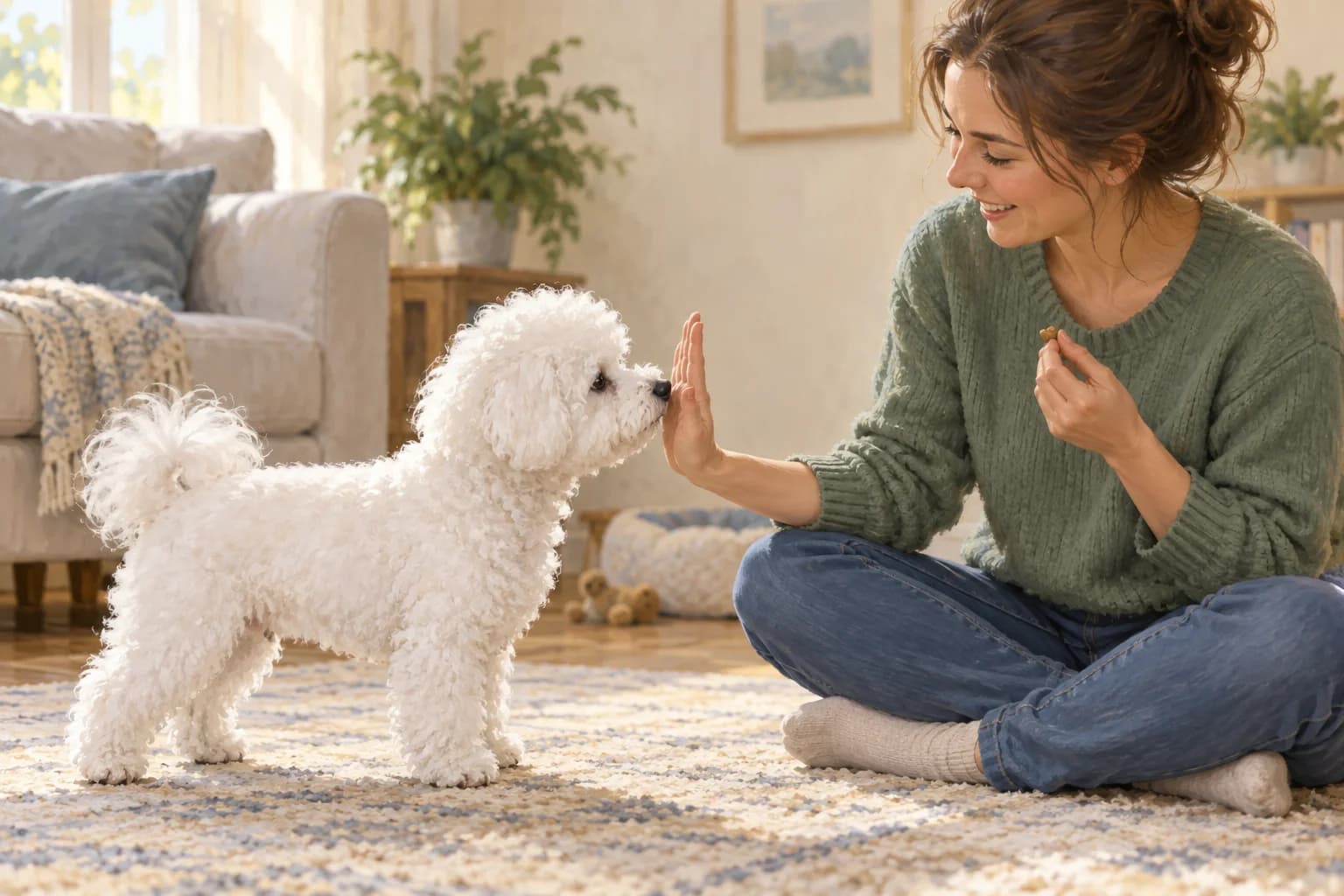
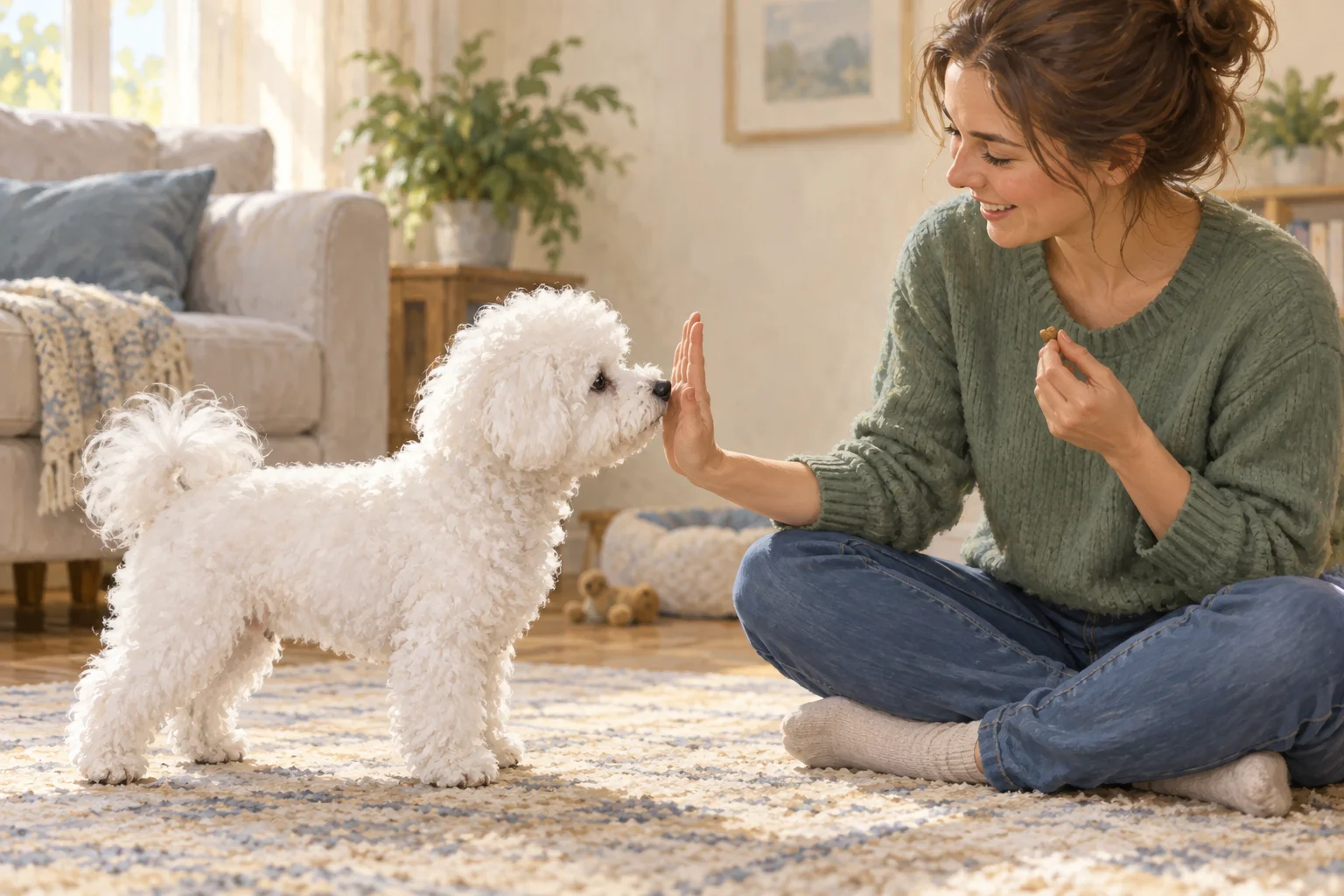
2) Touch (nose to hand)

Great for focus and recall practice. Hold your palm out and reward the nose tap.

3) Spin

Lure with a treat in a slow circle. Reward when the turn completes.

4) Shake

Lift the paw gently and reward. Add the cue after a few reps.

5) Down

Use a treat to guide the nose down and forward. Reward once elbows touch.

Training tips that work for Bichons

  • Keep sessions 3–5 minutes
  • Use tiny treats (pea‑size)
  • End on a win
  • Practice in a quiet place first

Trick‑training checklist

Weekly Trick Practice

  • 3 short sessions completed
  • Practiced in a quiet space
  • Rewards kept small
  • Ended each session on a win
Small, fun sessions beat long ones.

Sources consulted: AKC Bichon Frise breed overview (trainability and temperament).

Related guides

Explore these next for a clearer, more complete picture:

Related Interactive Care Tool: Dog Age & Calorie Calculator

Interactive Care Tool

Dog Age & Daily Calorie Calculator

All Dog Breeds
Dog Age (Years):3 Years
Body Weight (lbs):12 lbs (5.4 kg)
Calculated Companion Profile
Human Age~49 yrs
Daily Calories399 kcal
Recommended Water Intake:~10 oz / day
Resting Energy (RER):249 kcal

*Educational estimate based on logarithmic canine aging.

Bichon Frise Hub Editorial Team

Our editorial team researches and writes practical care guides for Bichon Frise owners, drawing on veterinary guidelines, breed standards, and community experience.

Published: January 29, 2026
Last updated: January 29, 2026
Your Bichon Frise Hub Editorial Standards
Hello friend! "Wags tail" Tap me to play or chat! 🐾