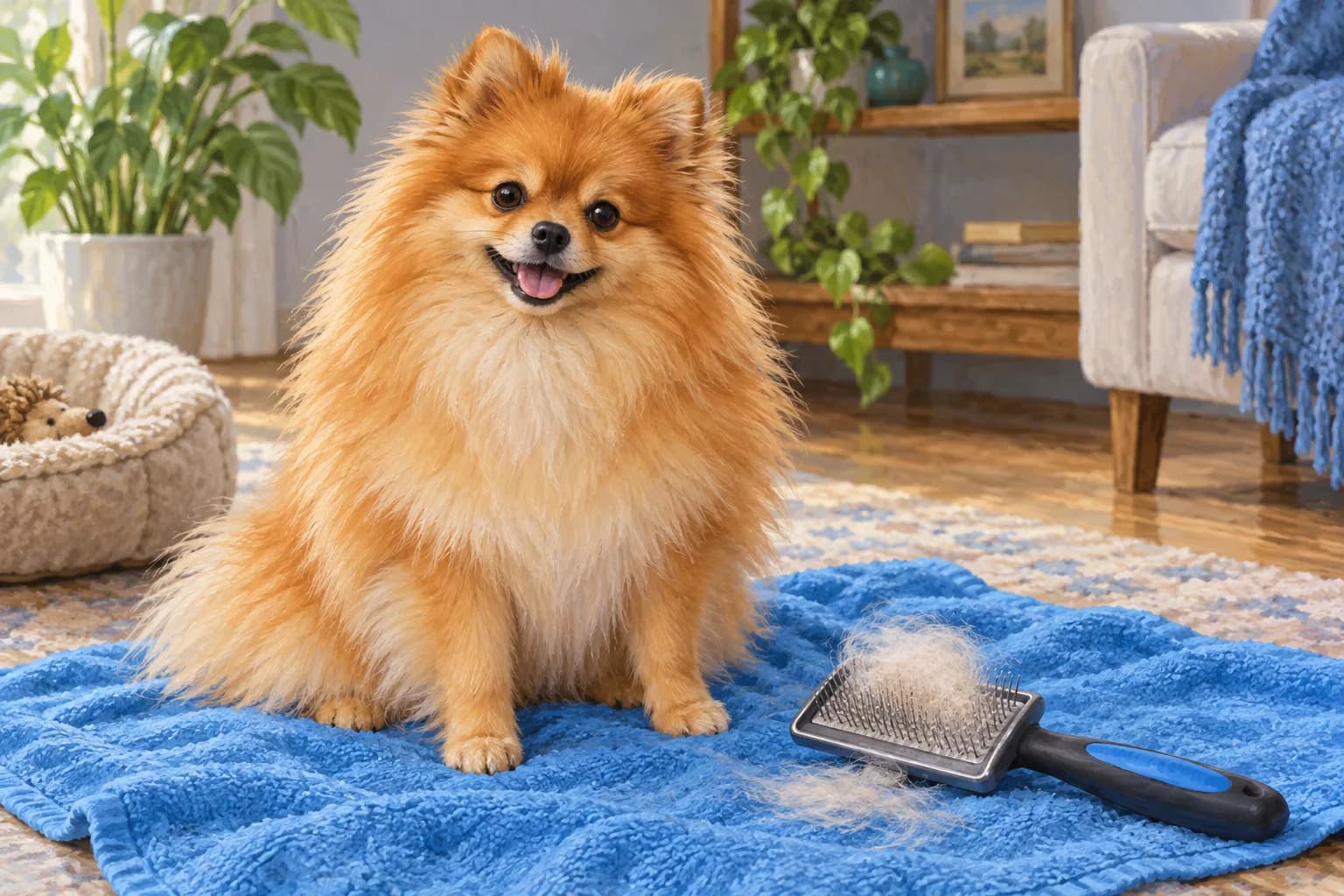
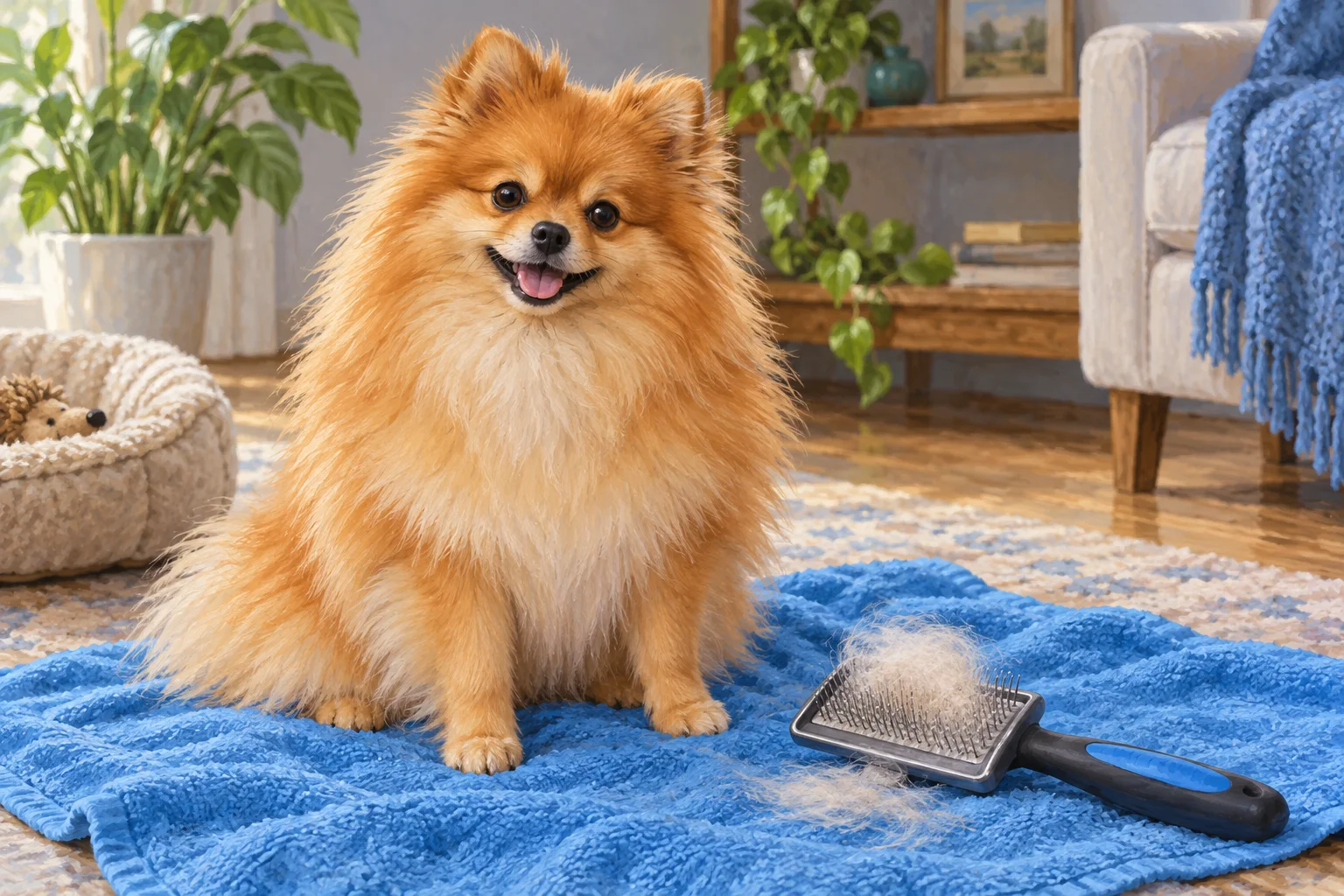
Pomeranians are not low-shedding dogs in the same way Maltese, Bichons, or Poodles are. They have a thick double coat and can shed noticeably, especially during seasonal coat changes. A Pomeranian can be tidy with good grooming, but it is not the best choice for someone who wants very little hair around the home.
The better question is how much shedding you can tolerate and whether you can keep up with brushing.
Shedding Reality
| Claim | Reality |
|---|---|
| Pomeranians are low shedding | Usually false compared with low-shedding breeds |
| Small dog means small shedding problem | A tiny double coat can still drop plenty of hair |
| Shaving fixes shedding | Shaving can damage coat texture and does not solve the cause |
| Supplements stop shedding | Nutrition helps health, but normal shedding still happens |
AKC describes the Pomeranian as a double-coated toy breed. That coat is part of the breed's look and care burden.
Why Pomeranians Shed
Pomeranians have a dense undercoat and a longer outer coat. Loose undercoat can come out during brushing, bathing, seasonal changes, and normal coat turnover.
You may see more shedding:
- during seasonal coat change
- when a puppy coat changes to adult coat
- after stress or illness
- with poor brushing
- with skin disease, parasites, or allergies
- after pregnancy or hormonal change
Normal shedding should not leave bald patches, sores, heavy itching, or inflamed skin.
Grooming Schedule
| Task | Common rhythm | Notes |
|---|---|---|
| Brushing | Several times weekly | More during coat blow |
| Comb check | Weekly or after brushing | Finds tangles near skin |
| Bath | As needed, often every few weeks | Dry fully after bathing |
| Professional groom | Every 4 to 8 weeks for many pet homes | Ask for coat-safe trimming |
| Skin check | Weekly | Look for flakes, redness, odor, hair loss |
Brush down to the undercoat without scraping the skin. A slicker brush and metal comb are common tools, but technique matters.
Should You Shave a Pomeranian?
Do not shave a Pomeranian for routine shedding control unless a veterinarian or qualified groomer has a specific reason. Double coats protect the skin and help with insulation. Shaving can leave uneven regrowth or expose skin to sun and irritation.
For easier care, ask for a tidy trim that keeps the coat functional instead of a close shave.
When Shedding Is Not Normal
Call your veterinarian if you notice:
- bald patches
- blackened or thickened skin
- intense itching
- sores or scabs
- sudden heavy hair loss
- dandruff with odor
- chewing at the skin
- hair loss on the tail or rear
The research signals around this topic included owners asking why a Pomeranian is losing hair. That can be more than normal shedding, so the article should not treat hair loss as a grooming-only issue.
Better Low-Shedding Alternatives
If low shedding is the main goal, consider:
- Bichon Frise
- Maltese
- Toy Poodle
- Havanese
- Yorkshire Terrier
These breeds still need grooming, but they usually drop less visible hair around the home than a Pomeranian.
Cleaning Tips
For homes with Pomeranian shedding:
- brush before loose hair spreads
- use washable throws on favorite spots
- vacuum fabric areas often
- wash bedding weekly
- use a lint roller near the door
- keep the coat dry after baths or rain
The goal is control, not zero hair.
FAQ
Are Pomeranians low shedding?
No, not compared with many low-shedding companion breeds. They are small, but their double coat can shed noticeably.
At what age do Pomeranians start shedding?
Puppies can go through a coat transition as the adult coat comes in. Timing varies, but increased shedding during coat change is common.
Why is my Pomeranian shedding so badly?
It may be seasonal shedding, poor brushing, stress, diet, skin disease, parasites, allergies, or another health issue. Bald spots or itching need a vet check.
Are Pomeranians high maintenance?
Their coat can be high maintenance. They also need training, socialization, dental care, and regular exercise.
Sources
- AKC: Pomeranian Dog Breed Information
- ASPCA: General Dog Care