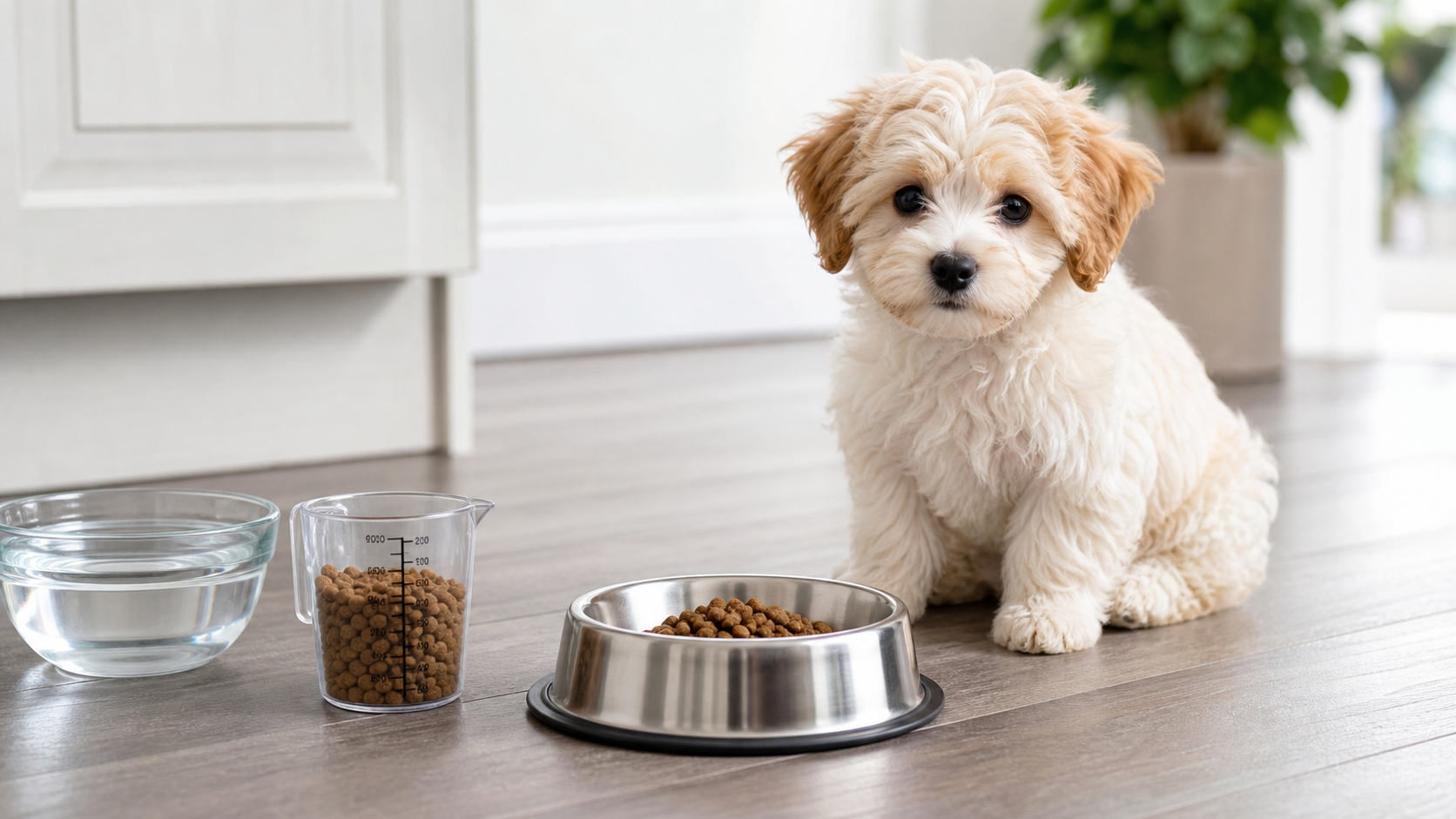
Small breed puppies need small meals often. Their stomachs are small, growth is fast, and long gaps between meals can be hard on young puppies. Most very young small breed puppies do better with 3 to 4 meals a day before moving toward 2 meals as they mature.
The amount is not the same for every puppy. Start with the food label for your puppy's age and weight, then adjust with your veterinarian if growth, stool quality, appetite, or body condition looks off.
Feeding Schedule by Age
| Puppy age | Meals per day | Focus |
|---|---|---|
| 8 to 12 weeks | 4 meals | small portions, steady routine, easy digestion |
| 3 to 4 months | 3 to 4 meals | growth, potty rhythm, slow food transitions |
| 4 to 6 months | 3 meals | body condition, treats counted into daily food |
| 6 to 10 months | 2 to 3 meals | slower growth, avoid overfeeding |
| 10 to 12 months | usually 2 meals | ask about adult-food timing |
Toy and small breeds may mature earlier than large breeds, but the switch to adult food should still match the food label, breed size, growth, and veterinary advice.
How to Use the Food Label
Do not copy a cup amount from another puppy owner. A cup of one kibble can contain far more calories than a cup of another.
Use this process:
- Weigh the puppy.
- Find the puppy feeding chart on the food package.
- Confirm the food is complete and balanced for growth or all life stages.
- Divide the daily amount into the number of meals.
- Recheck body condition weekly.
- Ask your veterinarian about changes if the puppy is too thin, gaining too fast, vomiting, or having diarrhea.
WSAVA nutrition guidance supports individualized feeding plans rather than one-size-fits-all amounts.
Portion Split Table
This table only shows how to divide the daily amount from the food label.
| Label daily amount | 4 meals/day | 3 meals/day | 2 meals/day |
|---|---|---|---|
| 1/2 cup | 1/8 cup each | about 2 tbsp + 2 tsp each | 1/4 cup each |
| 3/4 cup | 3 tbsp each | 1/4 cup each | 3/8 cup each |
| 1 cup | 1/4 cup each | 1/3 cup each | 1/2 cup each |
| 1 1/4 cups | about 5 tbsp each | about 0.42 cup each | 5/8 cup each |
For better accuracy, weigh meals in grams. Measuring cups are easy to overfill.
Daily Routine Example
| Time | 8 to 12 weeks | 3 to 5 months | 6 months plus |
|---|---|---|---|
| Morning | breakfast | breakfast | breakfast |
| Midday | lunch | lunch | optional small meal or training portion |
| Late afternoon | small meal | dinner | dinner |
| Evening | dinner | optional snack or training portion | usually no full meal |
Take the puppy out after meals. Many puppies need to poop soon after eating, often within 5 to 30 minutes.
Choosing Food
Look for:
- a complete and balanced puppy formula
- a life-stage statement for growth or all life stages
- small kibble or a texture the puppy can chew
- calories listed on the label
- clear feeding guidance
- a company that can answer nutrition questions
WSAVA's pet food selection guidance recommends checking life-stage suitability and asking whether the company has qualified nutrition expertise.
Treats Count
Training treats are still food. WSAVA treat guidance says treats should stay under 10% of a dog's daily calories. For a tiny puppy, that can be only a few small pieces.
Good options:
- regular kibble saved from meals
- pea-sized soft treat pieces
- a tiny lick mat portion counted from the meal
- one high-value treat broken into several rewards
If treats replace balanced puppy food, the diet can drift.
Picky Eating
First, rule out illness. A puppy who skips meals, vomits, has diarrhea, seems weak, or is not gaining weight needs a vet call.
If the puppy is healthy:
- feed on a schedule
- pick up uneaten food after 15 to 20 minutes
- limit toppers
- keep treats small
- use a quiet feeding spot
- transition foods slowly
Too many toppers can train the puppy to wait for something better.
Sensitive Stomach and Food Allergies
Soft stool or itching does not automatically mean food allergy. Puppies can have parasites, stress diarrhea, infections, abrupt diet changes, or environmental irritation.
Do not rotate through multiple diets without a plan. If symptoms keep returning, ask your veterinarian before changing foods again.
Homemade Food
Homemade puppy food can miss calcium, phosphorus, calories, vitamins, or trace nutrients unless it is professionally formulated. Growing puppies have less room for nutrition mistakes than adult dogs.
If you want homemade or fresh food, ask for a recipe from your veterinarian or a board-certified veterinary nutritionist.
FAQ
How much should a small breed puppy eat per day?
Use the food label for your puppy's age and weight, then divide the daily amount into 3 to 4 meals for young puppies. Adjust with body condition and veterinary guidance.
How long after eating does a puppy poop?
Many puppies poop within 5 to 30 minutes after eating. Use that pattern for potty training, but watch your puppy's actual rhythm.
Can a small breed puppy eat twice a day?
Older puppies often can. Very young small breed puppies usually do better with more frequent meals.
When should a small breed puppy switch to adult food?
Many small breeds switch near 10 to 12 months, but timing depends on breed, growth, food label, and veterinary advice.
Sources
- WSAVA: Global Nutrition Guidelines
- WSAVA: Selecting a Pet Food for Your Pet
- PetMD: How Much To Feed a Puppy
- WSAVA: Guide to Treats for Dogs