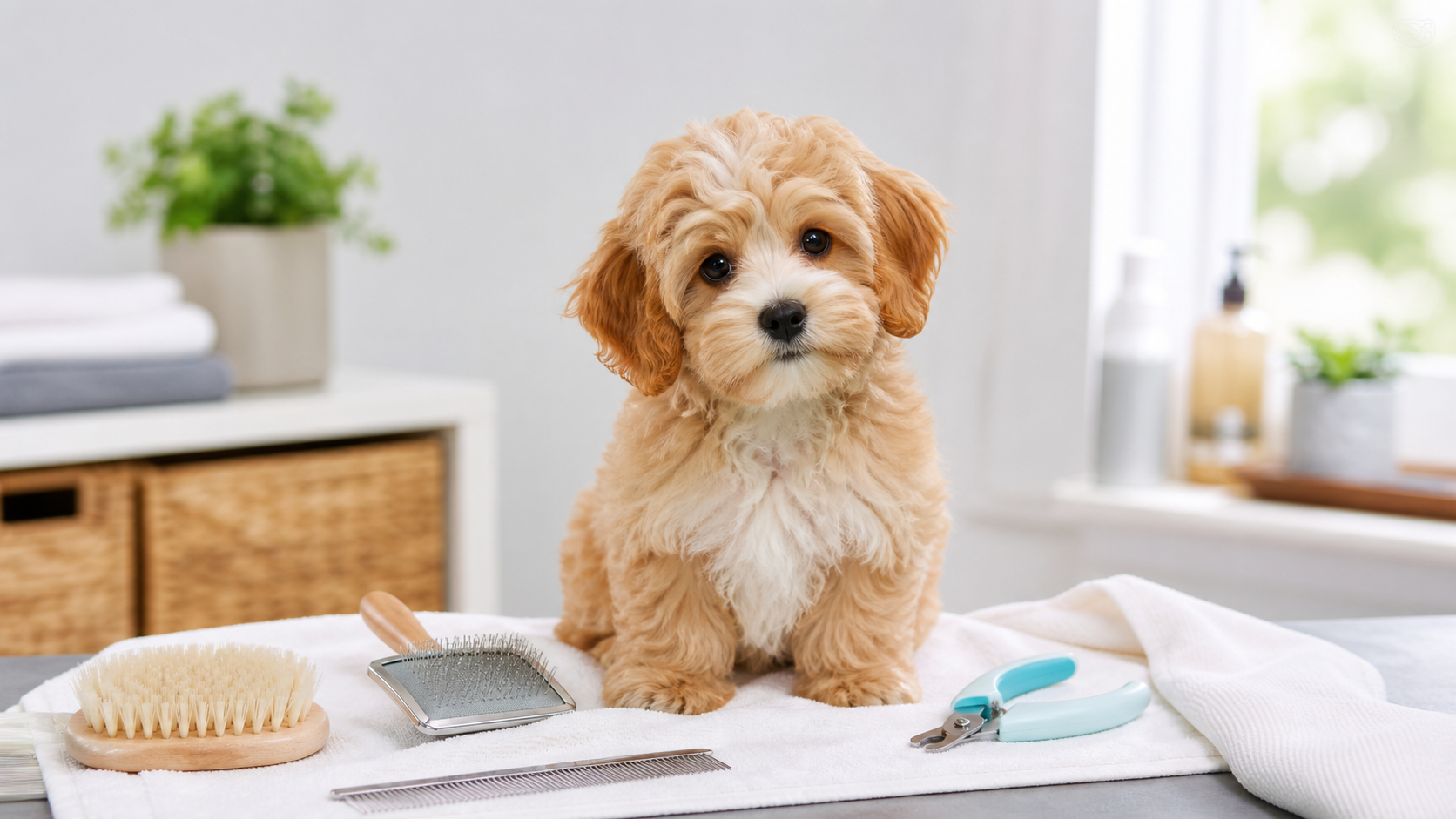
Start grooming practice as soon as a small breed puppy comes home. That does not mean a full haircut. It means short, calm practice with brushing, paw handling, face wiping, ear checks, and the sounds and tools the puppy will meet later.
For long, silky, curly, or fluffy coats, early grooming is preventive care. Mats can pull on the skin, eye stains can hide irritation, and overgrown nails can make handling harder.
Schedule by Age
| Puppy age | Home grooming | Professional grooming |
|---|---|---|
| 8 to 10 weeks | 2 to 5 minutes daily: brush touch, paw touch, face wipe | usually wait; focus on comfort |
| 10 to 12 weeks | brush 3 to 5 times weekly, touch paws, check ears | ask vet or groomer about a short intro visit |
| 12 to 14 weeks | add bath practice and longer brushing | first puppy groom may be possible if vaccine guidance is met |
| 4 to 6 months | brush to the skin, trim nails every 2 to 4 weeks as needed | maintenance groom every 4 to 8 weeks depending on coat |
| 6 months plus | regular coat, nail, ear, dental, and face care | adult-style groom interval based on breed and haircut |
PetMD's puppy grooming guidance lists brushing, bathing, nail trims, and dental care as normal parts of routine grooming. The exact timing depends on coat type, health, vaccination status, and the puppy's tolerance.
Daily Two-Minute Handling
Do one tiny session a day:
- touch both ears
- touch each paw
- lift the lip for one second
- wipe under the eyes if needed
- brush one small area
- reward calm behavior
Stop before the puppy gets frustrated. Short sessions work better than one long wrestling match.
Weekly Checklist
| Task | Frequency | Notes |
|---|---|---|
| Brushing | 3 to 7 times weekly | daily for long, curly, or silky coats |
| Eye/face wipe | daily or as needed | use a damp cloth or vet-safe wipe |
| Paw handling | daily practice | prepares for nail trims |
| Nail check | weekly | trim as needed, often every 2 to 4 weeks |
| Ear check | weekly | watch for odor, redness, wax, or scratching |
| Bath | often every 3 to 4 weeks | brush before bathing |
| Professional groom | often every 4 to 8 weeks | depends on coat length and breed |
Use the table as a rhythm, not a contract. A short-coated French Bulldog puppy and a Maltese puppy do not need the same coat work.
Tools by Coat Type
| Coat type | Examples | Useful tools |
|---|---|---|
| Curly | Toy Poodle, Bichon | slicker brush, metal comb |
| Silky | Maltese, Yorkie | pin brush, comb, detangling spray |
| Plush or double | Pomeranian, some mixes | pin brush, comb, gentle undercoat tool |
| Short | French Bulldog, Pug | rubber curry brush or soft bristle brush |
After brushing, run a comb through the coat. A brush can slide over a mat while the knot stays tight near the skin.
First Groomer Visit
The first visit should be short and boring in a good way. Ask for a puppy introduction appointment rather than a full haircut if the puppy is nervous.
Useful first-groom tasks:
- gentle bath
- blow-dryer introduction
- light brushing
- face and paw tidy
- sanitary trim if needed
- nail trim
If the puppy is scared, stop early and book another short visit. A calm first month with the groomer is worth more than a perfect first haircut.
Bathing
Many small breed puppies do well with a bath about every 3 to 4 weeks, plus spot cleaning when needed. Brush first. Water can tighten mats and make them harder to remove.
Use puppy-safe shampoo and rinse well. If the puppy has odor, heavy itching, redness, flakes, or repeated ear problems, ask a vet before switching products again and again.
Tear Stain Cleaning
Light coats show tear stains quickly. Some staining is cosmetic, but sudden staining, redness, squinting, swelling, odor, or thick discharge needs a vet check.
Safer care:
- wipe gently with a damp cloth
- keep hair near the eyes tidy
- avoid peroxide or whitening products near the eyes
- ask a vet about sudden or painful eye changes
Do not promise that a food change or home remedy will remove stains. Puppy eyes deserve caution.
Mats and Scissors
Do not cut tight mats with scissors. Skin can fold into the mat, especially around ears, armpits, and sanitary areas. PetMD's matting guidance recommends safer handling and professional help for difficult mats.
If mats are forming often, shorten the haircut, brush more frequently, or ask the groomer to show the exact places you are missing.
FAQ
When should a puppy go to the groomer for the first time?
Many puppies can start with a short professional puppy groom around 12 to 14 weeks if vaccination guidance is met. Ask your veterinarian and groomer.
Is it okay to groom a 3 month old puppy?
Yes, if the session is gentle and age-appropriate. A short intro groom is usually better than a stressful full appointment.
How often should a small breed puppy be brushed?
Curly, silky, or long coats often need brushing several times a week, sometimes daily. Short coats need less brushing but still benefit from handling and skin checks.
What if brushing makes my puppy bite?
Use shorter sessions. Brush one small area, reward, and stop. Try after play when the puppy is tired. If mats hurt, get professional help before restarting at-home practice.