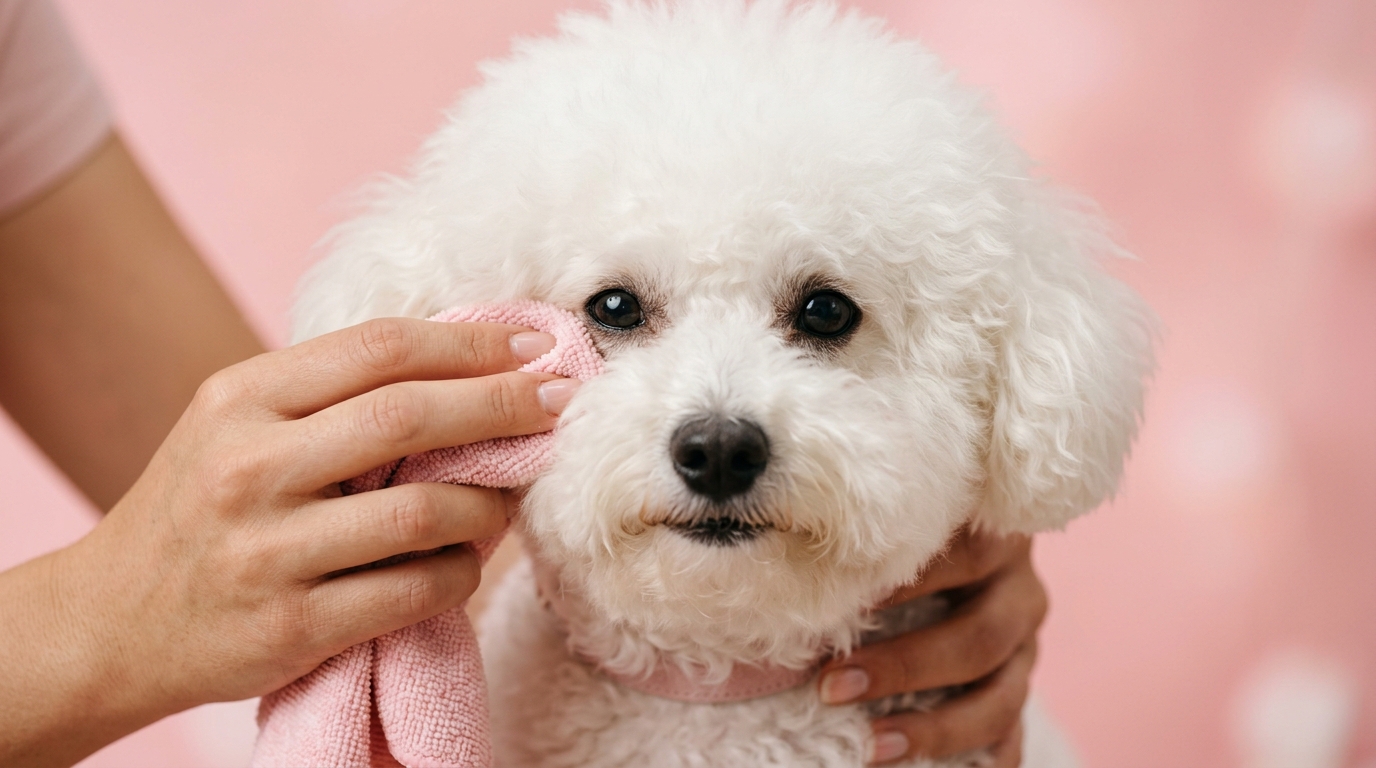
Small breed puppy tear stains are common on light coats, but they are not always just a cosmetic problem. Mild brown or rust-colored staining under the eyes can come from normal tearing, face shape, hair rubbing near the eye, shallow tear ducts, diet changes, or irritation. Redness, squinting, swelling, odor, thick discharge, pawing at the eye, or a sudden change needs a veterinarian.
For most small puppies, the safe first step is simple: keep the face dry, wipe gently, trim hair away from the eyes, and watch for signs of discomfort. Do not put peroxide, whitening products, essential oils, or harsh "tear stain removers" near a puppy's eyes.
Quick Check: Cosmetic Stain or Vet Problem?
| What you see | What it may mean | What to do |
|---|---|---|
| Light brown staining on both sides, puppy is comfortable | Common tearing and coat staining | Clean gently and monitor |
| One eye stains more than the other | Hair rubbing, blocked drainage, irritation, injury | Book a vet check |
| Red eye, squinting, swelling, thick discharge | Eye pain or infection is possible | Call your vet promptly |
| Bad smell or damp skin folds | Skin irritation may be starting | Keep dry and ask your vet |
| Stains started suddenly | Something changed | Check food, grooming, environment, and vet signs |
VCA's puppy tear-stain guidance and PetMD's tear-stain overview both treat tear staining as a symptom with several possible causes. That is the right mindset. Clean the face, but do not assume you know the cause if the eye looks sore.
Why Small Breed Puppies Show Tear Stains
Small dogs often have big eyes, short muzzles, fine facial hair, and light coats. That combination makes even normal tears visible.
Common reasons include:
- hair touching the eye
- shallow or narrow tear drainage
- teething-age irritation
- allergies or environmental dust
- eye infection or inflammation
- blocked tear ducts
- skin folds holding moisture
- food or water changes that coincide with more tearing
Maltese, Bichons, Toy Poodles, Shih Tzus, Havanese, Yorkies, Pomeranians, and many small doodle mixes can show staining quickly because the coat is light or fine around the face.
What Owners Are Actually Worried About
The owner evidence we collected is practical and specific. A Maltese puppy owner asked how to reduce stains safely under the eyes while already wiping with a clean cloth and feeding a small-breed puppy food. YouTube evidence clusters around the same questions: how to remove stains, how to prevent them from setting into the coat, and which home methods are safe.
The pattern is clear: owners are not only asking "what product works?" They are asking whether the staining means something is wrong, whether food matters, and how to clean without hurting the puppy's eyes.
Safe Daily Cleaning Routine
Use a routine that is boring and gentle.
- Wash your hands.
- Dampen a soft cloth, gauze pad, or cotton pad with warm water.
- Wipe away from the eye, not into it.
- Use a fresh section for each eye.
- Pat the area dry.
- Comb dry hair away from the eye if the puppy tolerates it.
- Reward the puppy and stop.
For a tiny puppy, one calm minute is better than a long cleaning session. If dried crust is stuck, soften it with a damp cloth first. Do not scrape.
Keep Hair Away From the Eye
Hair rubbing the eye can trigger more tearing. Ask a groomer or veterinarian to show you how short the face hair should be for your puppy's breed and haircut.
Do not use scissors close to the eye if the puppy wiggles. A professional face trim is safer than trying to cut stained hair while the puppy moves.
What Not to Put Near Puppy Eyes
Avoid:
- hydrogen peroxide near the eye
- human whitening products
- essential oils
- lemon juice or vinegar
- powders that can blow into the eye
- antibiotic products unless prescribed
- old "tear stain" supplements without veterinary approval
Some older tear-stain products have used antibiotic ingredients. Do not use medicated products casually for a cosmetic stain.
Food, Water, and Tear Stains
Food can matter for some dogs, but it is often overstated. A food change may help if a puppy has a true sensitivity, but tear stains alone do not prove food allergy.
Use a calmer process:
- feed a complete puppy diet
- avoid rapid food changes
- keep water bowls clean
- track staining, itching, stool, and ear symptoms together
- ask your vet before starting an elimination diet
If the puppy also has itchy skin, repeated ear problems, soft stool, or vomiting, the conversation changes. That points to a health pattern, not a simple grooming issue.
Products: How to Choose Without Getting Fooled
If you buy a tear-stain wipe or cleanser, choose one labeled for dogs and for use around the eyes. Read the directions. If the label says to avoid eye contact, take that literally.
A useful product should help clean the fur. It should not promise to cure the reason the puppy is tearing. If the stain keeps returning, the next step is finding the cause, not buying a stronger cleaner.
When to Call the Vet
Call your vet if you notice:
- squinting
- redness
- yellow or green discharge
- swelling
- pawing at the eye
- a cloudy eye
- one-sided tearing
- a bad smell under the eye
- wet skin that looks irritated
- sudden heavy staining
Eye problems can worsen quickly. For puppies, it is better to be early than to wait until the face is raw or the eye is painful.
Breed Notes
| Breed or type | Tear-stain note |
|---|---|
| Maltese | Light, silky hair shows stains fast |
| Bichon Frise | White coat makes even mild staining obvious |
| Toy Poodle | Curly face hair can hold moisture |
| Shih Tzu | Short muzzle and prominent eyes need close watching |
| Havanese | Long facial hair may rub if not trimmed |
| Cavapoo and small doodles | Mixed coat texture can trap dampness |
Breed explains visibility. It does not rule out irritation.
Simple Prevention Checklist
- Wipe and dry the face once daily.
- Keep hair from touching the eyes.
- Clean food and water bowls.
- Use a complete puppy food.
- Avoid harsh products near the eye.
- Photograph stains weekly if you are tracking change.
- Ask a vet if the eye looks uncomfortable.
FAQ
Is it normal for puppies to have tear stains?
It can be normal, especially in light-coated small breeds. It is not normal if the eye is red, painful, swollen, cloudy, or producing thick discharge.
How do groomers get rid of tear stains?
Groomers usually clean the coat, trim stained hair when safe, keep face hair away from the eyes, and recommend a maintenance routine. A groomer cannot diagnose eye disease.
Can I use distilled water to clean tear stains?
Plain water on a soft cloth is usually a safe cleaning method. The bigger issue is drying the coat afterward and watching for signs that the puppy needs a vet check.
What foods should I avoid for tear stains?
There is no universal "tear stain food" to avoid. Do not change foods repeatedly without a plan. If you suspect allergy or sensitivity, ask your vet how to test that safely.
Sources
- VCA Hospitals: Puppy Tear Stains
- PetMD: Dog Tear Stains: Causes, Treatment, and Prevention
- MedVet: Everything You Need to Know About Tear Staining in Dogs