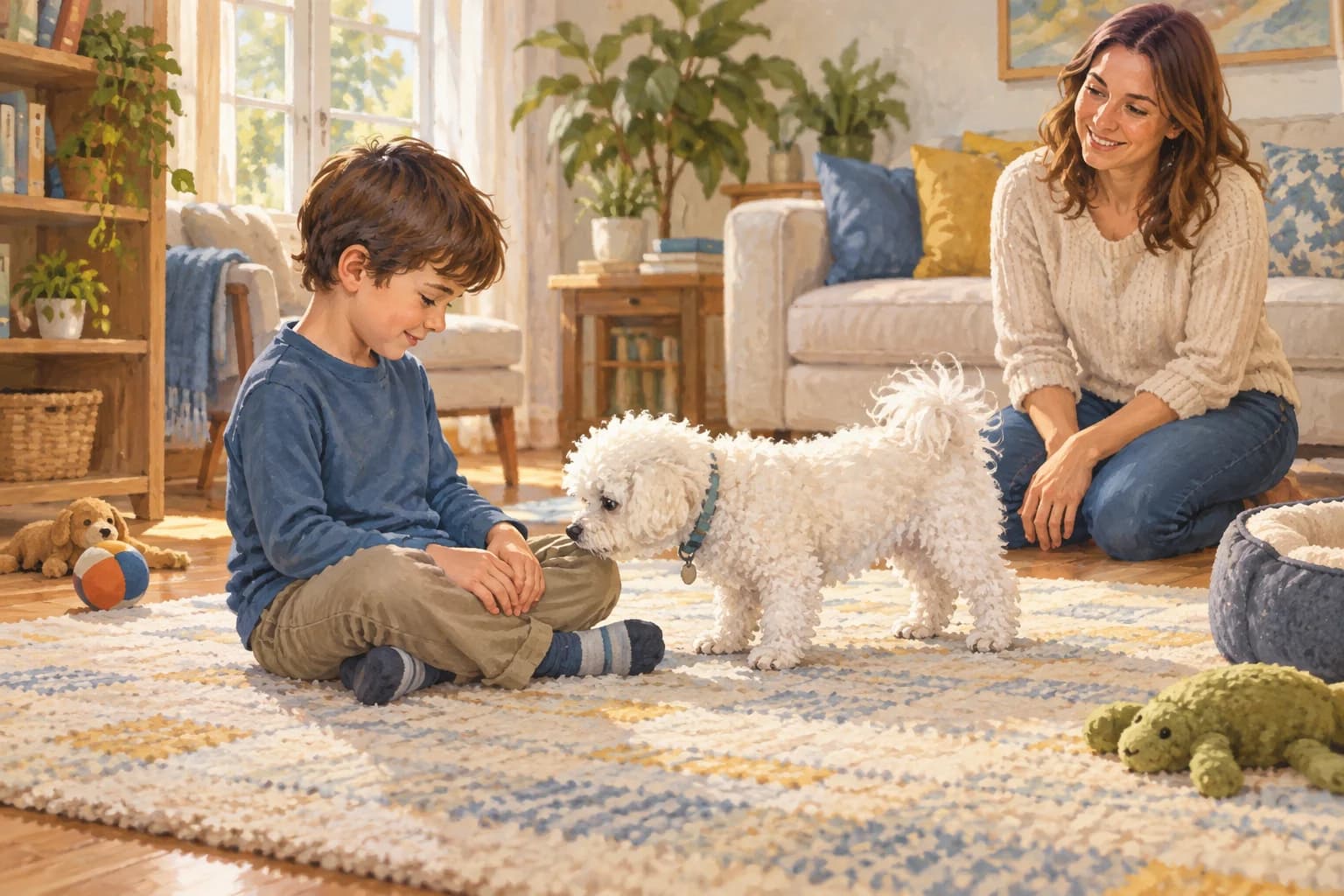
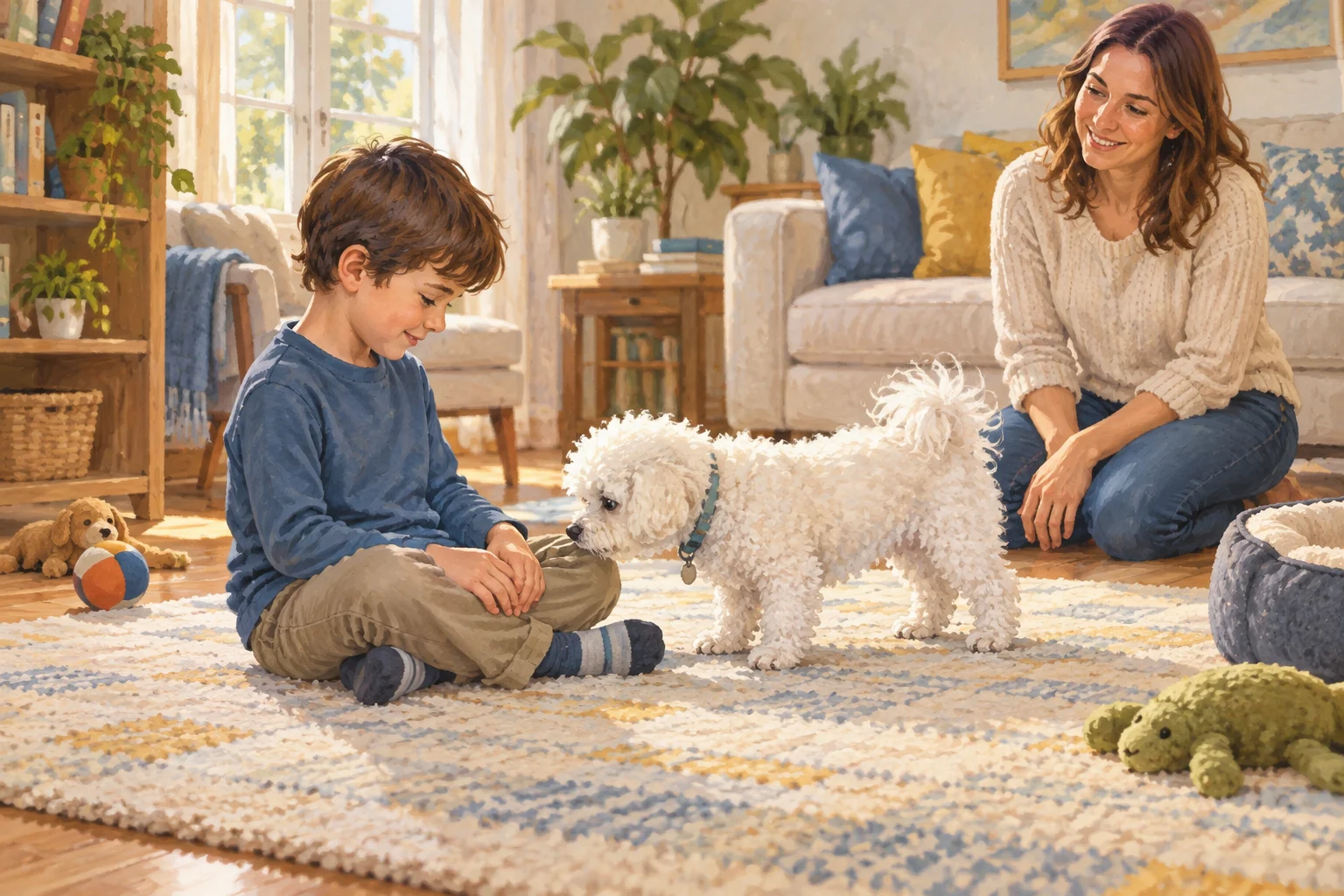
The best small dogs good with kids are not chosen by size alone. Look for a steady temperament, moderate energy, trainability, and a body sturdy enough for normal family life. Bichon Frise, Cavalier King Charles Spaniel, Havanese, Pug, Boston Terrier, Shih Tzu, Miniature or Toy Poodle, and some older rescue dogs can be good fits when the children are taught how to behave around dogs.
No small breed is automatically safe with children. The match depends on the individual dog, the child's age, supervision, training, and whether adults can manage both sides calmly.
Quick Fit Table
| Breed or type | Why families consider it | Watch carefully for |
|---|---|---|
| Bichon Frise | Playful, social, low-shedding coat | Grooming needs and potty-training consistency |
| Cavalier King Charles Spaniel | Gentle, affectionate, often adaptable | Heart health screening and weight control |
| Havanese | Cheerful, sturdy for a toy breed, social | Coat care and separation stress |
| Pug | Friendly, sturdy, usually people-oriented | Heat, breathing, weight, and eye safety |
| Boston Terrier | Compact, playful, often trainable | High excitement and heat tolerance |
| Shih Tzu | Companion-focused, lower exercise needs | Face/eye care and grooming |
| Miniature or Toy Poodle | Smart, low-shedding coat | Grooming, mental stimulation, barking |
| Adult rescue dog | Known adult size and temperament | History with children must be checked |
AKC's family-dog guidance emphasizes matching breed traits to lifestyle, home, and children's ages. That is the right lens for small dogs.
What Matters More Than Breed
Breed can narrow the search, but it should not make the decision alone.
Check these first:
- the dog has lived calmly around children before
- the child can follow rules about touching and space
- adults can supervise, especially with toddlers
- the dog has a safe place where children cannot bother them
- the dog's energy level fits the household
- grooming, barking, and training needs fit real daily life
The research signals around this topic show that owners worry about safety and poor risk judgment, especially when small dogs, children, and unfamiliar dogs mix. That is sensible. A small dog can still bite, and a child can still hurt a small dog by accident.
Best for Younger Kids
For younger children, prioritize sturdier, patient, people-friendly dogs. Tiny or fragile dogs may be a poor match for toddlers who still grab, fall, or run suddenly.
Better traits:
- calm recovery after noise
- comfort with gentle handling
- no history of guarding food or toys
- moderate exercise needs
- easy grooming routine
- adult dog size over extra-tiny size
An adult dog with a proven child history may be easier than a tiny puppy. Puppies bite, chase, jump, and need toilet training, which can be stressful in a busy home.
Best for Older Kids
Older children can often participate in training, brushing, walking, and enrichment. That opens the door to smart, active small breeds such as Poodles, Havanese, Bichons, Papillons, and some terriers, as long as the adults still own the responsibility.
Good jobs for older kids:
- filling water bowls
- brushing under adult guidance
- practicing simple cues
- hiding treats for scent games
- helping with calm walks
- recording potty or feeding routines
Do not make a child the dog's only caregiver. Adults still need to manage health, safety, training, and vet care.
House Rules for Kids and Small Dogs
Use simple rules before the dog comes home.
| Rule | Why it matters |
|---|---|
| Let sleeping dogs rest | Startling a dog can cause defensive behavior |
| No grabbing ears, tail, paws, or collar | Small dogs can be hurt easily |
| No hugging unless the dog clearly enjoys it | Many dogs tolerate hugs poorly |
| Leave the dog alone while eating | Prevents food-guarding conflict |
| Call the dog instead of chasing | Gives the dog choice |
| Use a quiet voice near the dog bed | Protects the dog's safe space |
These rules protect both the child and the dog.
Signs a Small Dog Is Stressed
Teach adults and older kids to watch for:
- turning away
- licking lips
- yawning when not tired
- whale eye
- tucked tail
- hiding
- growling
- stiff body
- snapping
A growl is information, not defiance. Move the child away and give the dog space.
Mistakes to Avoid
- choosing the smallest dog because it seems easier
- letting toddlers carry dogs
- assuming low-shedding means low work
- skipping training because the dog is small
- allowing rough play because it looks cute
- ignoring growls or avoidance
- buying a puppy when an adult dog would fit better
Small dogs need the same respect as large dogs, just with more attention to injury risk.
FAQ
What is the most kid-friendly small dog?
There is no single best breed for every family. Bichons, Cavaliers, Havanese, Pugs, Shih Tzus, and Poodles can all fit some homes, but the individual dog and supervision matter most.
Are small dogs safe with toddlers?
Some are, but toddlers need close supervision. Very small or fragile dogs can be injured by rough handling.
What small dog is best for kids with allergies?
Families often consider Bichons, Poodles, Maltese, and Havanese. No dog is allergen-free, so spend time with the breed first.
Should we get a puppy or adult dog?
For many families, an adult dog with a known child history is easier than a puppy. Puppies need constant training and can mouth, jump, and have accidents.
Sources
- AKC: Best Family Dogs
- AKC: Responsible Dog Ownership