Daily Exercise Needs of a Bichon Frise
While Bichon Frises are small, they need more than just a few minutes of activity. Experts recommend around 30-60 minutes of exercise daily, combining moderate physical activity with mental engagement. Bichons are intelligent and curious, so blending physical activity with mental stimulation helps prevent boredom and destructive behaviors.
Balancing Physical and Mental Stimulation
A Bichon’s exercise routine should incorporate short walks, interactive games, and training sessions to engage both mind and body. Since they are highly social, they enjoy activities that involve their human family members.
2. Types of Exercises Suitable for Bichon Frises
Bichons benefit from a mix of indoor and outdoor activities tailored to their size and energy levels:
Indoor Activities
- Interactive Games: Bichons love games like hide-and-seek, which challenge their mental skills.
- Training Sessions: Basic obedience or agility exercises provide mental stimulation and strengthen the bond with their owner.
Outdoor Activities
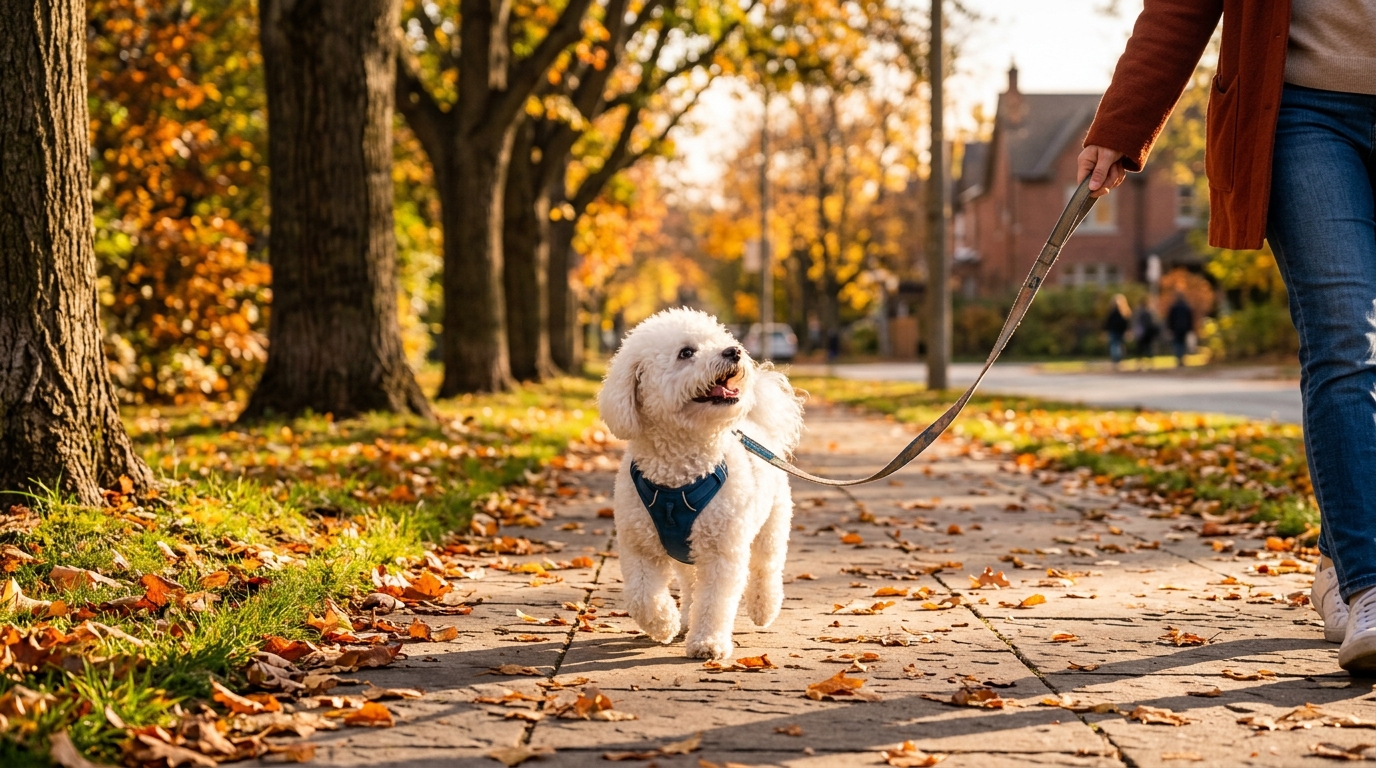
- Daily Walks: A moderate-paced walk for 20-30 minutes helps maintain a Bichon’s physical health.
- Fetch: Playing fetch is a fun way to engage their instincts and give them a burst of energy.
- Social Play: Bichons are social dogs and enjoy meeting other dogs, so supervised playdates can be an excellent way to get exercise.
3. Benefits of Regular Exercise for Bichon Frises
Regular exercise is crucial for a Bichon Frise's health:
- Physical Health: It helps maintain a healthy weight, supports muscle tone, and reduces the risk of obesity-related conditions.
- Behavioral Benefits: Exercise channels their energy positively, reducing unwanted behaviors like excessive barking or chewing.
- Mental Health: Engaging activities reduce stress and prevent boredom, which is essential for their overall well-being.
4. Signs Your Bichon Needs More or Less Exercise
Knowing when your Bichon needs more or less exercise can ensure their health and happiness:
- Under-Exercised: Signs include restlessness, destructive behavior, and excessive barking.
- Over-Exercised: Bichons may display signs of fatigue, joint pain, or irritability if they’ve had too much exercise. Watch for limping, reluctance to continue, or excessive panting.
5. Exercise Tips for Different Life Stages
Each life stage of a Bichon Frise has specific exercise needs:
Puppy
- Gentle play sessions and basic training exercises are ideal for puppies.
- Avoid long walks or intense play as puppies’ bones are still developing.
Adult
- Establish a consistent routine with varied activities like walking, fetch, and mental puzzles to meet their energy needs.
- Aim for 30-60 minutes of activity split between walks, play, and mental exercises.
Senior
- Senior Bichons may have joint issues, so opt for low-impact activities.
- Short, frequent walks and gentle play help maintain mobility without strain.
Conclusion
Bichon Frises thrive with a balanced mix of daily exercise that keeps them mentally stimulated and physically fit. By understanding their exercise needs at each stage of life, owners can ensure their Bichon Frise enjoys a healthy, happy life. Regular, tailored exercise is the key to a well-behaved, contented Bichon that brings joy and companionship to any family.