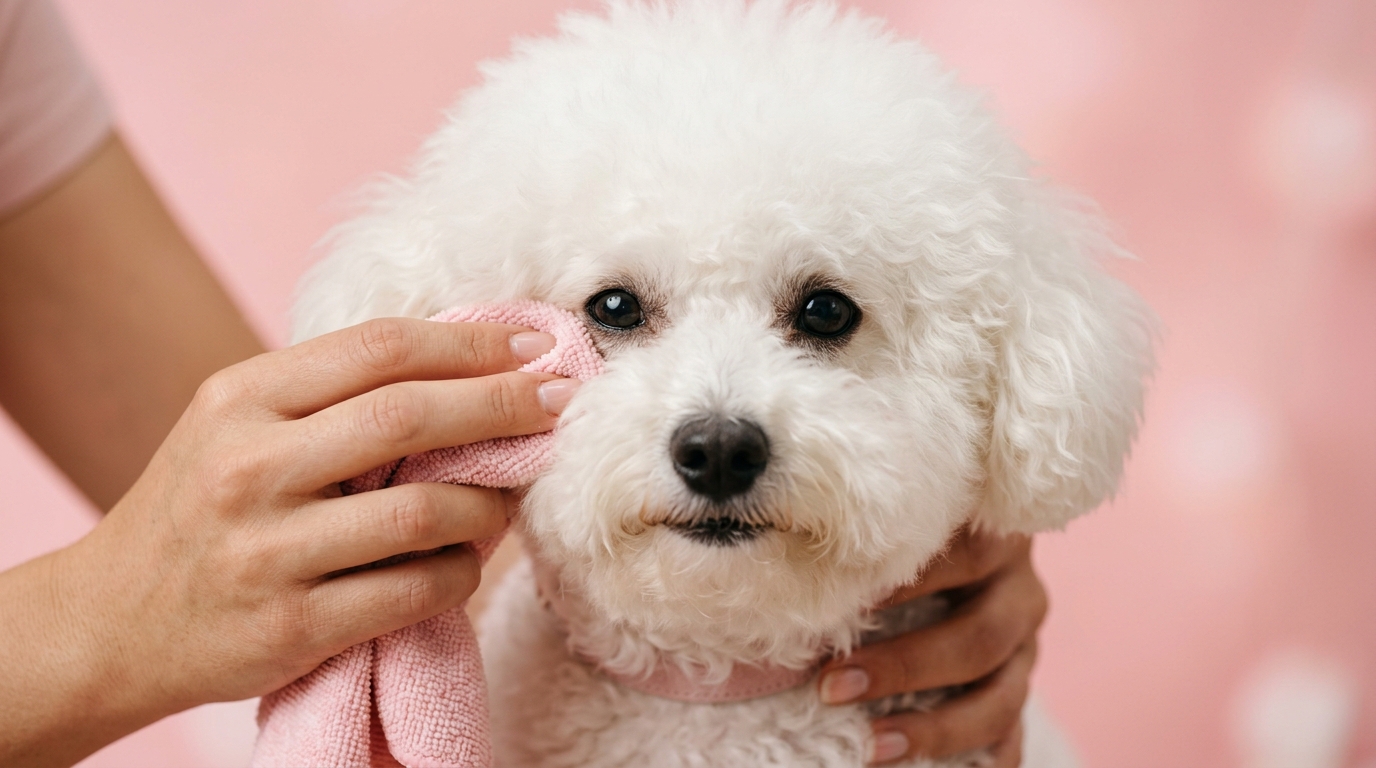
Bichon Frises get tear stains because tears sit on white facial hair and leave brown or rust-colored marks. The stain itself is usually pigment and moisture on the coat. The reason for the tearing can be simple, like hair touching the eye, or medical, like irritation, infection, blocked tear drainage, allergies, or eyelid problems.
Do not treat every tear stain as a grooming problem. If your Bichon is squinting, pawing at the eye, producing thick discharge, staining mostly on one side, or suddenly staining more than usual, book a vet check.
The Short Answer
| Cause | What it looks like | What helps |
|---|---|---|
| White coat showing normal tears | mild staining, dog is comfortable | daily wipe and dry |
| Hair rubbing the eye | blinking, wet hair near inner corner | face trim by groomer |
| Blocked or narrow tear drainage | constant wetness under eye | vet exam |
| Eye irritation or infection | redness, squinting, discharge | vet treatment |
| Allergy or skin irritation | tearing plus itching, ears, paws, skin signs | vet-guided plan |
| Moist skin folds | smell, dampness, redness under eye | dry routine, vet if inflamed |
VCA and PetMD both describe tear staining as a sign with several possible causes. That is especially important for Bichons because the white coat makes the stain obvious before the cause is obvious.
Why Bichons Show Stains So Easily
Bichons have dense white hair around the face. Even a small amount of tearing can show quickly. Curly hair can also hold moisture close to the skin, so the stain may look worse than it would on a darker or shorter-coated dog.
The breed's coat does not cause every tear problem. It makes the evidence easier to see.
Common Causes in Bichons
Hair near the eye
Curly face hair can touch the eye or hold moisture at the inner corner. A careful face trim can reduce rubbing and make cleaning easier.
Tear drainage issues
Some dogs do not drain tears efficiently through the normal ducts. Tears spill onto the face instead. Your vet can check whether drainage, eyelid shape, or anatomy is part of the problem.
Irritation
Dust, shampoo, smoke, wind, pollen, or a tiny hair can irritate the eye. If the eye is red or painful, do not keep trying grooming fixes.
Infection or inflammation
Thick discharge, odor, swelling, or discomfort needs medical attention. Eye infections and injuries are not cosmetic.
Allergies
Allergies may show up with itchy paws, ear problems, skin redness, or face rubbing. Tear stains alone do not prove food allergy.
What Owners Are Asking
The evidence we collected showed two related concerns. General small-dog owners ask how to remove stains safely. Bichon owners ask why the stains keep returning even after cleaning.
That difference matters. Cleaning removes buildup from the coat. It does not fix an eye that keeps watering because of irritation, drainage, or rubbing.
Daily Care Routine for a Bichon
Use this once or twice daily if the eyes look comfortable.
- Dampen a soft cloth with warm water.
- Wipe away from the eye.
- Use a clean section for the other side.
- Pat the hair dry.
- Comb the face hair gently if your Bichon allows it.
- Reward calm handling.
Drying matters. Damp hair under the eye keeps the stain cycle going and can irritate skin.
Grooming Help
Ask your groomer to keep hair clear around the inner corners of the eyes. For many Bichons, a regular face tidy is more useful than buying stronger stain products.
Do not cut close to the eyes at home if your dog moves. The risk is not worth it.
Products and Home Remedies
Be careful with anything marketed as a fast tear-stain fix. Do not put these near your Bichon's eyes:
- peroxide
- vinegar
- lemon juice
- essential oils
- human whitening products
- powders that can drift into the eye
- medicated products unless your vet prescribed them
If a product says to avoid eye contact, it should not be used where it can run into the eye.
Food and Water Claims
Some owners report improvement after changing food, water bowls, or water type. That does not mean every Bichon with stains needs a diet change.
Use common sense:
- feed a complete and balanced diet
- avoid sudden food changes
- wash bowls daily
- track itch, ears, stool, and skin signs
- ask your vet before changing diets for a suspected allergy
If your Bichon has repeated ear infections, itchy paws, soft stool, or skin flare-ups, bring those details to the vet. They are more useful than the stain alone.
When Tear Stains Need a Vet
Call your vet if you see:
- squinting
- redness
- one eye watering more than the other
- yellow or green discharge
- swelling
- pawing or rubbing
- cloudy eye
- bad smell under the eye
- raw or red skin below the eye
- sudden staining in an adult dog
Eye pain can be subtle. A Bichon who is still eating and playing can still have an irritated eye.
Prevention Checklist
- Keep face hair trimmed away from the eyes.
- Wipe gently with warm water.
- Dry the hair after wiping.
- Keep bowls clean.
- Avoid harsh products near the eye.
- Watch for one-sided or sudden changes.
- Use your vet for diagnosis, not internet guesses.
FAQ
Are tear stains normal in Bichon Frises?
They are common, especially because the white coat shows staining quickly. Common does not always mean harmless. Pain, redness, swelling, thick discharge, odor, or sudden change needs a vet.
Do tear stains mean my Bichon has allergies?
Not by themselves. Allergies usually come with other signs, such as itching, paw licking, ear problems, or skin irritation.
Can grooming remove Bichon tear stains?
Grooming can clean stained hair and reduce hair rubbing near the eye. It cannot treat eye disease, blocked drainage, or infection.
Will tear stains go away forever?
Sometimes they improve when the cause is fixed or the face hair is managed well. Some Bichons need ongoing gentle cleaning because their coat shows moisture quickly.
Sources
- VCA Hospitals: Puppy Tear Stains
- PetMD: Dog Tear Stains: Causes, Treatment, and Prevention
- MedVet: Everything You Need to Know About Tear Staining in Dogs