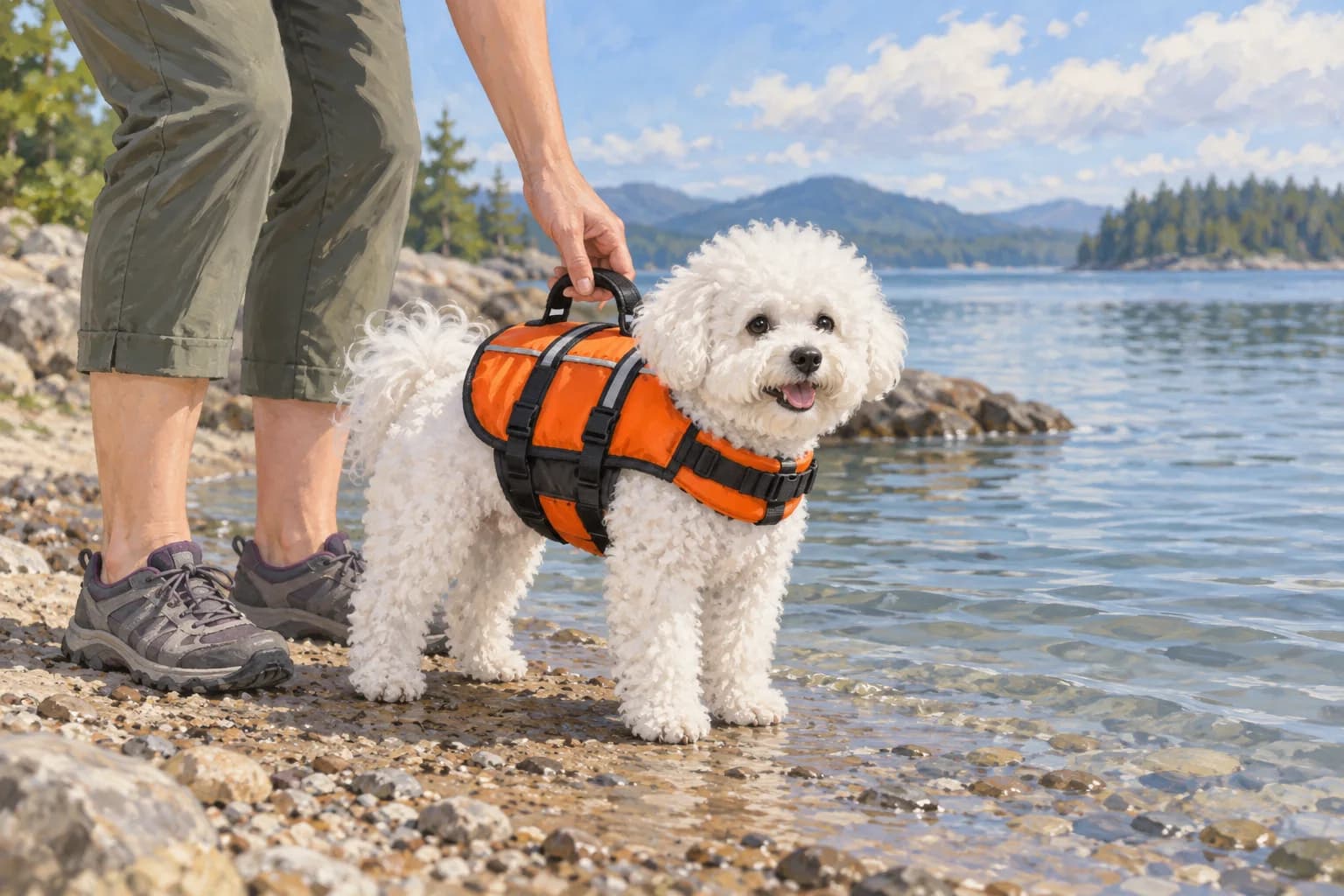
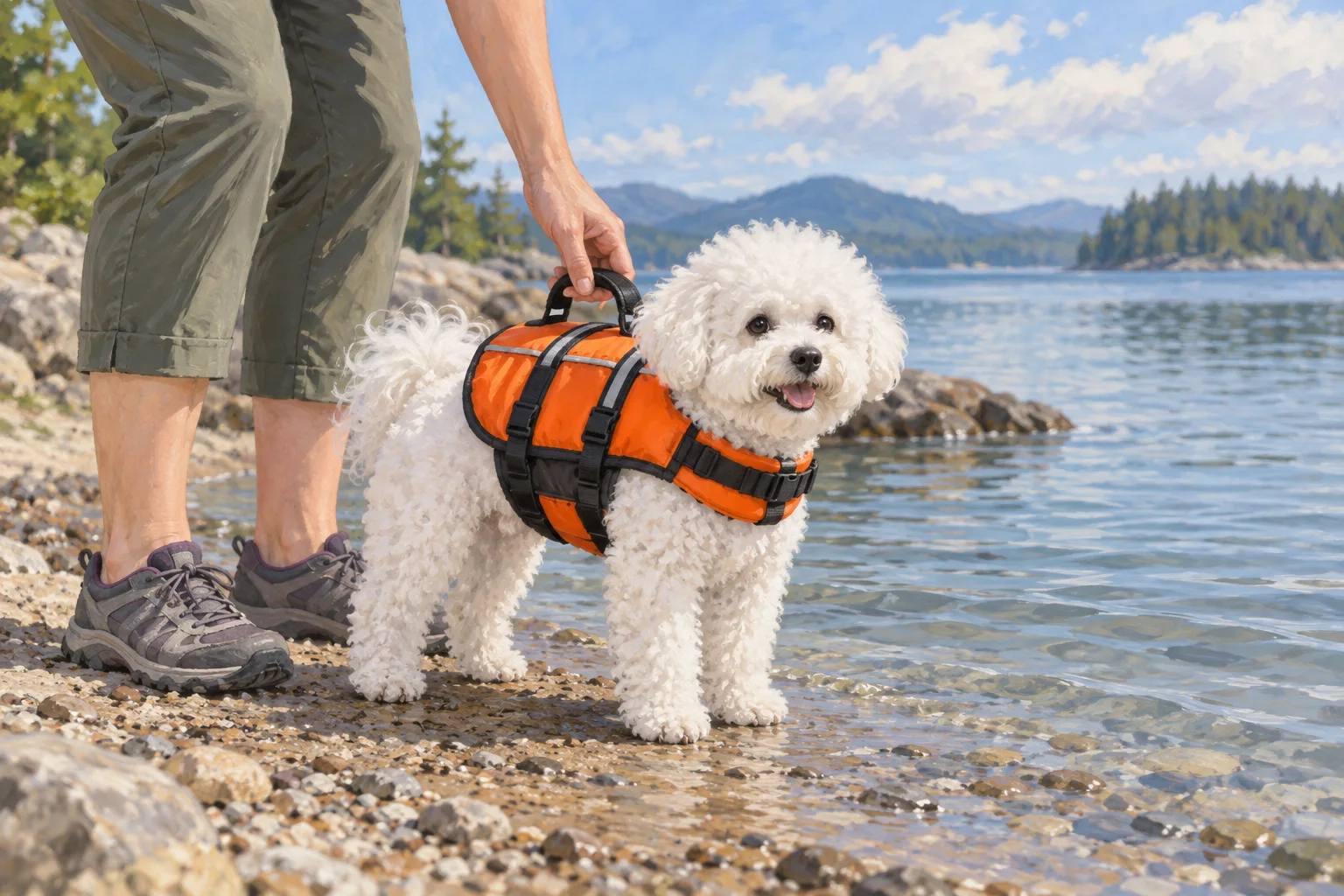
Many Bichon Frises can paddle and learn to enjoy water, but that does not make every Bichon a confident or safe swimmer. Coat weight, fitness, age, health, water conditions, and the individual dog's comfort all matter. Treat swimming as a skill to teach, not an instinct to test.
The short answer
A healthy Bichon may swim successfully in calm water after a gradual introduction. Keep the dog within reach, use a properly fitted canine life jacket, and never force entry. A pool, lake, river, and ocean present different risks; success in a shallow pool does not prove a dog is safe around currents or waves.
Before your Bichon enters the water
- Ask your veterinarian first if your dog has heart, breathing, joint, seizure, ear, or skin problems.
- Fit a bright life jacket with secure adjustable straps and a sturdy grab handle. Test the fit while wet in shallow water.
- Choose calm, clean water with a gradual entry and an obvious exit.
- Bring fresh drinking water so your dog is less tempted to drink pool, lake, or salt water.
- Check local advisories for algae, contamination, currents, and beach rules.
How to teach swimming without creating fear
- Let your Bichon investigate the edge while wearing the life jacket.
- Reward relaxed behavior and walking through paw-deep water.
- Move only slightly deeper while you support the jacket handle and chest.
- Guide the dog toward the exit after a few seconds. Repeat the exit until it is familiar.
- End while the dog is still calm. Increase time over several sessions, not in one day.
Do not throw, pull, or carry a frightened dog into deep water. If the dog freezes, scrambles upward, pants heavily, or tries to escape, return to dry ground.
Pool, lake, beach, and boat risks
Pools
Teach the steps or ramp from several starting points. Supervision matters even when the pool is fenced because a dog in the water may not be able to find the exit. Rinse the coat after swimming and dry the ears and skin gently.
Lakes and rivers
Currents, drop-offs, fishing hooks, debris, and harmful algae can turn a familiar-looking shoreline into a hazard. Keep the session close to shore and skip any water covered by a public-health advisory.
Ocean
Waves and rip currents can overwhelm a small dog quickly. Prevent salt-water drinking and keep the dog leashed near surf unless local rules and conditions clearly permit otherwise.
Boats and docks
The life jacket stays on aboard the vessel and on the dock. Use its handle for emergency retrieval, but do not rely on a collar to lift a dog from the water.
Stop the session if you see trouble
End swimming for shivering, slowing strokes, repeated coughing, vomiting, confusion, weakness, blue or pale gums, or difficulty breathing. Breathing trouble, collapse, suspected water inhalation, or neurologic signs need urgent veterinary care.
After-swim coat and ear care
Rinse off chlorine, salt, sand, and lake residue. Towel-dry the coat down to the skin, especially under the harness, around the feet, and in the armpits. Blot the outer ear dry without inserting swabs or drops unless your veterinarian recommended them. Brush only after the coat is rinsed and partly dried; rubbing a wet curly coat can tighten tangles.
Related Bichon care
- Traveling with a Bichon Frise
- Bichon Frise skin-infection warning signs
- Coat care after wet-weather activity